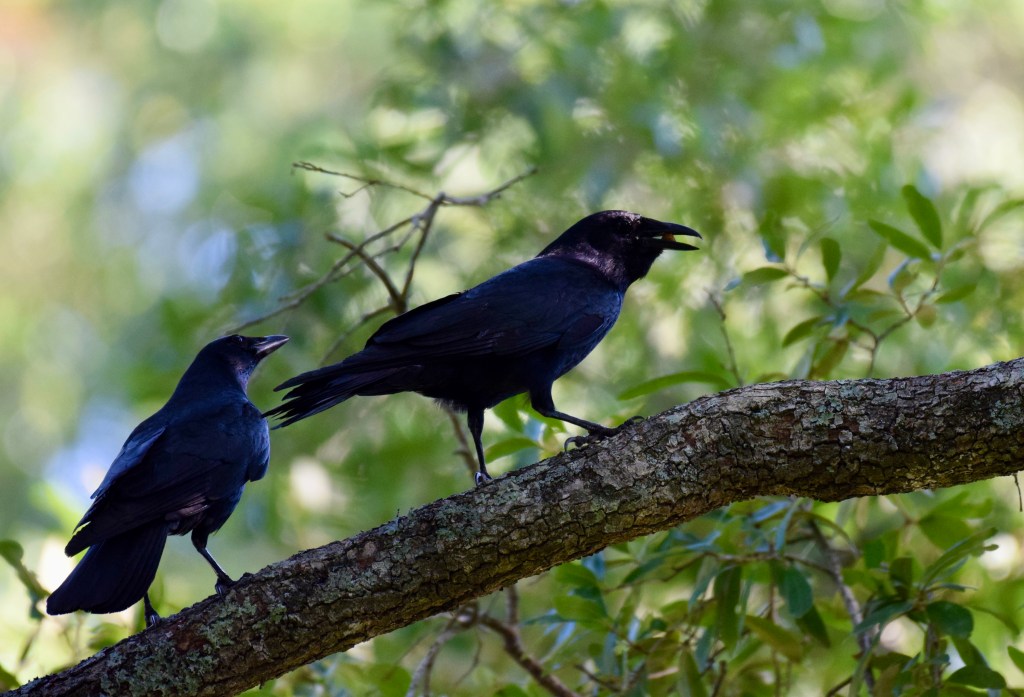
The American Crow (Corvus brachyrhynchos) is, I have come to find out in the broad class of songbirds. For hundreds of years this large, ominous, occasionally noisy black bird has been maligned by generations of humans. The crow has been the center of evil superstitions, believed to be bad luck, signs of a plague and so on. Farmers have shot them believing them to damage crops. Because they are omnivores and occasionally take the young of other birds, humans have great difficulty with that idea. These are but a few of the negative things spoken and written of the American Crow and his cousins.
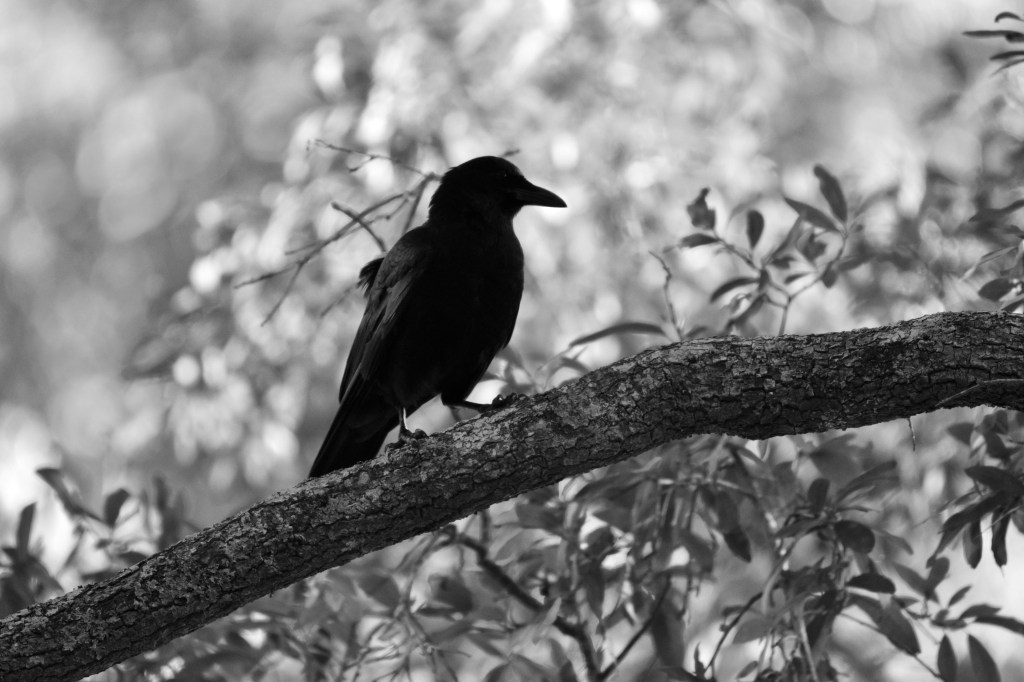
A few months ago during my studies of the birds I have been photographing, I predictably came across the crow and began to study this big bird. What I found out after looking into the bird for a while was that absolutely everything that I thought I knew about crows was wrong. Crows are in fact highly intelligent, family oriented, sensitive creatures who have learned to survive alongside humans in spite of our litany of flaws. Maybe even exploiting some of our flaws. After learning how fascinating these majestic and bright birds are, I began the lengthy process of trying to attract them to my feeders. No simple task.
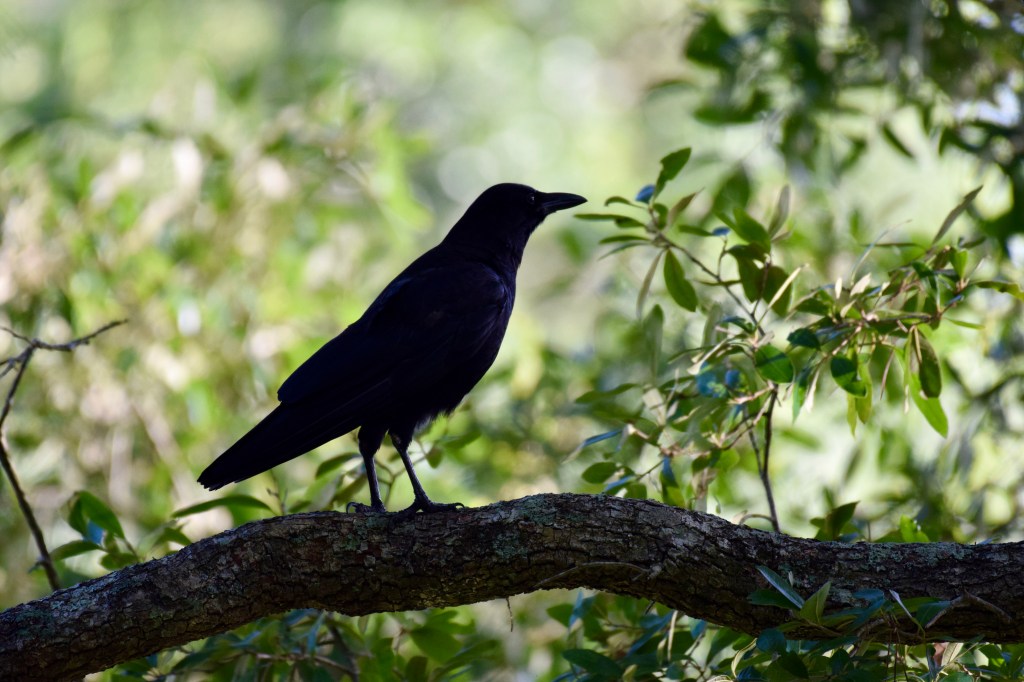
Eventually a pair began to show up regularly to eat at my feeder. They are cautious and wary of my camera and telephoto lens but I have managed a couple of decent photographs. This is what I have learned first hand about American Crows: 1. They are tender and loving. On two occasions, I have seen the pair alight on a branch of a tree in my yard. One of the two sat with its head lowered while the other gently preened it. Then after the caring attention, the one who had been doing the preening came to the feeder, retrieved food and brought it to the other one (see the first picture-you can see the food in its beak). 2. Sometimes they bring more of the family. Although the birds are shy and difficult for an amateur birder to discern differences, I am quite certain that the first two bring offspring to eat on occasion. When they do, they are quite cautious and will not eat at the feeder if I am outside which indicates a high degree of care for the family. 3. The birds have a broad diet. They love dog food kibble, but also eat peanuts, meal worms, mixed bird seed and insects from my yard. 4. Although they do not share well with blue jays at the feeder, I have seen no sign of aggression or anything to indicate that they are dangerous in any way.
So what is the “problem with crows”? As first responders and veterans, we are exposed to careers filled with trauma, vicarious trauma and endless stress of all kinds. Many of us became jaded by are fellow human beings behavior which includes lies on the best day and on the worst day unspeakable acts of violence. We form opinions about people, places, activities, and life in general based on our interactions and career. Some of this is based on a challenging career and some of this is a natural product of aging.
What if we are missing out on beauty, tenderness and genuine connection with people places and nature because we are in our own way? I believed what I believed about crows because I “just knew it”. Once I took the time and effort to find out for myself, these majestic sensitive creatures have added value to my life. As veterans and first responders, life is difficult enough during your career. There are well known dangers. Retirement presents lesser known challenges, but they are very real. I encourage anyone reading this to find the “crows” in your life and seek truth. It may lead to unexpected beauty and connections. Get out there, explore new worlds and make the best of the next chapter.
 On Beyond Blue
Good article Mike. Especially since we both enjoy birding.
Ken Bergström [cid:image001.png@01DAC3F7.0AA95960]
KenBergstrom@outlook.comKenBergstrom@outlook.com
850-556-6434
LikeLiked by 1 person