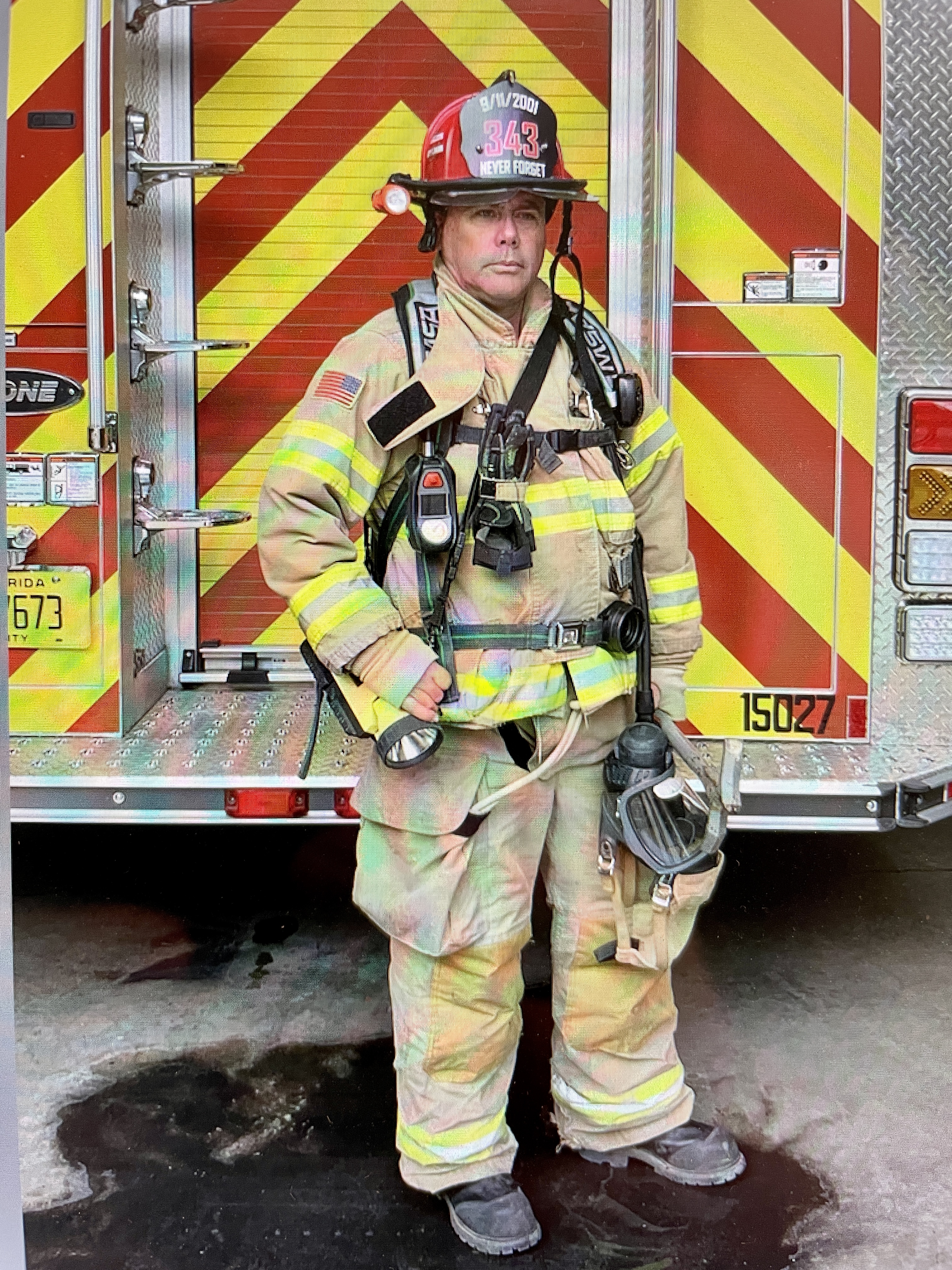
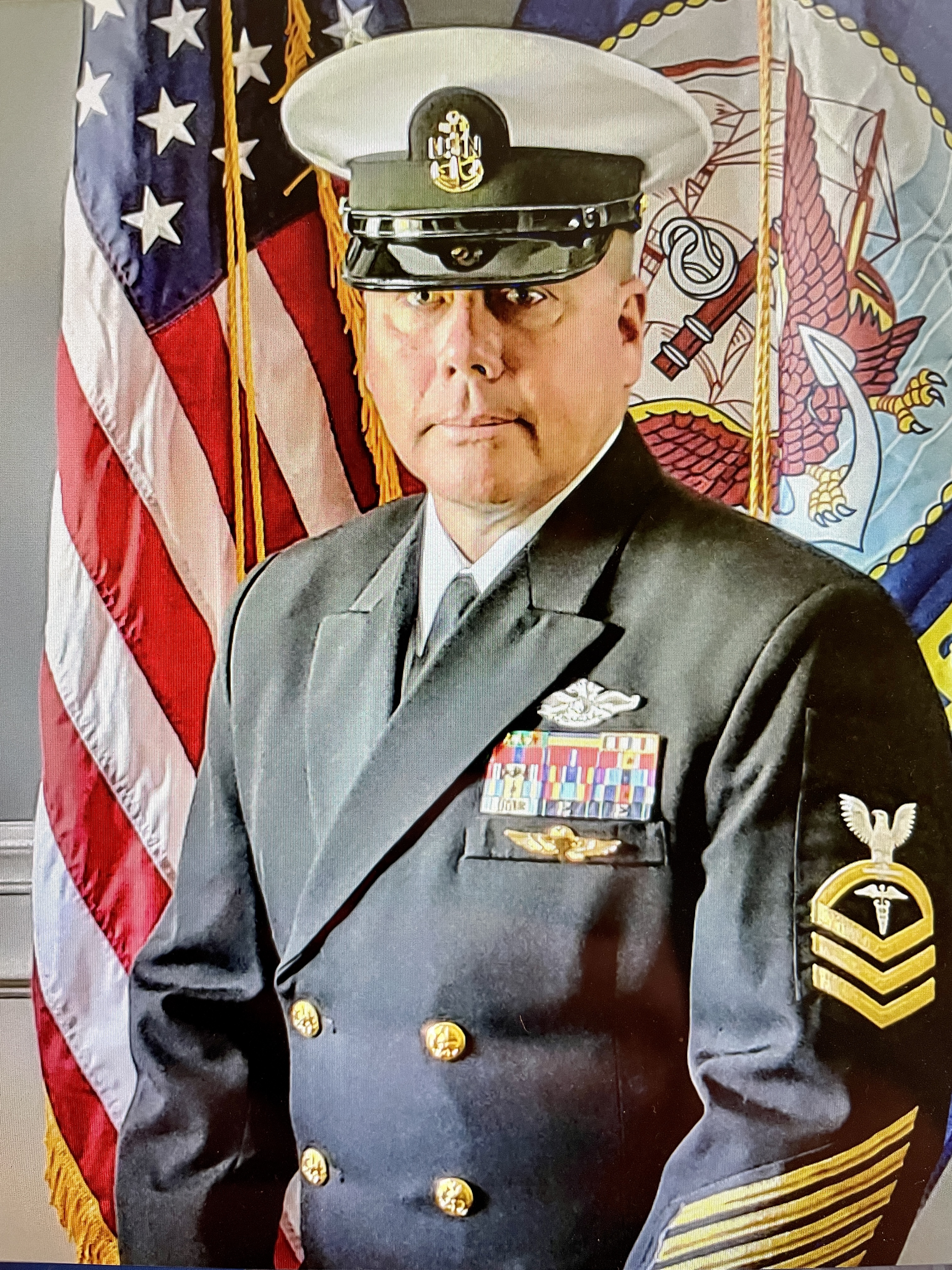
As I have worked on this blog, I have worked hard to make sure the content is relevant, recent, and of a quality that encourages readers to read, follow, share and return. While researching and writing this post, I worked harder than ever. I labored to collect information that filled the categories I mentioned above, but harder even to honor the courage of the man who I now feature in this blog. He was courageous enough to become a firefighter and serve his community, to enlist in the military and serve his country, to care for the wounded here at home and on the battlefield and now he has been courageous enough to talk about his struggle and journey with PTSD. This man, my friend is (lieutenant/Chief) Michael Terhune. Having worked with Mike, I know him to epitomize the Warrior Servant.
Before I start chronicling Mike’s journey, I wanted to briefly address a few things; 1. I am not a veteran. I am dedicating myself to learning military language, structure, command, rank, and protocol so that these wellness topics might be as relevant as possible to our military brothers and sisters. However, if I make mistakes, those mistakes come from a genuine place of respect. 2. The purpose of this post is to inform and share. I will avoid making editorial statements about any actions or inactions on the part of any entities, or speaking in clinical terms about any psychology. I am not in a position to do either with any credibility. Instead, I will tell Mike’s story to the best of my ability. I’ll tell you where he started, how his journey progressed and where he is now with the goal of allowing the reader to derive lessons learned, self reflect and reach conclusions on the topic. 3. According to the US Department of Veterans Affairs, the number one and number two cause of death among veterans is heart disease and suicide. 4. Lastly, if, as you read through Mike’s struggle and journey, you see yourself in the story…reach out. Reach out now. I’ll provide vetted links at the conclusion of the story.


The first few paragraphs of this story are a highly condensed background/biography that is necessary to set up critical events during this journey of service and eventually PTSD. The young Mike Terhune was like many of us. Unsure of what he wanted to do for a living, he was attending college and working at Publix. In 1990 Mike began his career in the fire service by attending the local fire academy. Following his completion of the fire academy, he enlisted the the United States Coast Guard. During boot camp, Mike was appointed Recruit Commander and was an honor graduate of boot camp. These honors would foreshadow leadership later in his life and career. By this time, Mike was fully committed to getting hired at the Tallahassee Fire Department and when he was not working at Publix, with the Coast Guard, or as a reserve firefighter he was filling out fire department applications and getting certified as an EMT and eventually a paramedic.
1995 was a big year for Mike. It was in 1995 that Mike was hired full time by the Tallahassee Fire Department and also when he enlisted in the Navy. Like many in our line of work, he passed the time when he was not working by running, working out and riding jet skis whenever possible. 1995 also marked the first time he experienced a disturbance of any kind. Shortly after starting as a full time firefighter, fellow firefighters reported to Mike that he was having “night terrors”, sleep walking and talking to them while he was sleep walking. No one thought much of it, and as is the case with all of us on occasion, fellow firefighters light heartedly joked about it and it faded into firehouse lore. When I paused here to inquire more about the circumstances surrounding these nighttime incidents, Mike was unable to recall any single trauma or series of incidents at that time aside from the usual calls for service for the fire department. This was likely the first warning bell.
As an enlisted man in the US Naval Reserve, Mike was an E4 (3rd Class Petty Officer), attended and completed HM3 (Hospital Corpsman) and was assigned to support Marine Corps personnel. He devoted himself to his assignment and to caring for others. Over the next couple of years, he was promoted to driver at the Fire Department, continued his service and training with the Navy and assumed as many responsibilities with the Fire Department as he was able. The Navy assigned Mike to the 3rd Force Recon. This assignment meant a substantial amount of training over and above what he had to this point and included but was not limited to Jump School and Dive School.
In 2003 Petty Officer Second Class Michael Terhune woke up and found himself being deployed to Camp Coyote Kuwait. This was his first combat deployment and the young corpsman had looked forward to the challenges, trained hard and did everything a person could do to prepare to serve his country and fellow soldiers, sailors and Marines. Mike spent about six months at Camp Coyote helping to set up the facility and then went on to work in the battlefield hospital. The hospital treated all types of battlefield trauma including but not limited to gunshot wounds, amputations, blast trauma, and dehydration. When pressed a little about the nature of the casualties, Mike described them as “major trauma casualties”.
After his duties in Camp Coyote, Mike returned home with no notable problems and continued to pursue his career in fire service. In 2007, the newlywed volunteered for another deployment and was assigned to 4th Force Recon as an E6 (Petty Officer First Class/Company Corpsman). This assignment eventually found him deployed in Fallujah Iraq. Mike’s responsibilities as a Company Corpsman meant that he was supervising other corpsman, deploying with the Marines, fighting with the Marines and rendering aid as a corpsman. This deployment was in the vast Saladin Governorate which at that time was loaded with the enemy, physical hazards of all kinds and exacerbated by environmental hazards such as scorching heat. Contact with the enemy happened during his deployment and included an IED detonating right in front of him, damaging the vehicle in front of him and injuring people in that vehicle. In 2008, Marine Sgt. Michael Ferschke was killed in action. Terhune knew him and was aware of his death.
January of 2009 saw Mike return stateside and begin his demobilization. By this time, he had contracted a rare infection called Leishmaniasis. Mike was forced to strongly self advocate for treatment and was eventually sent to Walter Reed for treatment that turned out to be rather unpleasant and lengthy. When he finished treatment, he joyfully returned to his home town, wife, family and friends. The return was uplifting, overwhelming and primarily positive. But, eventually the activity and interaction began to subside. Mike wasn’t back at work as a firefighter yet and there was quiet in his life. It was here that the second warning bell rang and rang loudly. In this quiet, fresh from the chaos of Iraq, treatment for his Leishmaniasis and demob. Mike began hearing things that weren’t there. He began flinching in the car as his wife drove him places. He became irritable, easily frustrated and experienced a sense of profound uselessness and despair associated with routine frustrations such as being unable to help a child with math homework.
As most of us would surmise, this made life incredibly unpleasant, relationships difficult and added to the already deep sense of despair he was feeling. Eventually, things came to a head at home and Mike’s wife urged him to seek help. Although initially hesitant, Mike did seek help at the VA and that began what would amount to over a decade of counseling. Counseling, vigorous exercise and a monumental effort from Mike, family and friends found him stabilized, on track at home and at work and moving forward until 2020.
However, there were peaks and valleys along the way for Mike. He was promoted to lieutenant and assigned a prestigious position in his agency called “Fire Med One”. Peak. In this position, he responded to major incidents one right after the other all over the county. Crimes with medical trauma, car crashes, traumatic injuries, and deaths. In 2010, Mike was working in his position of Fire Med One and responded to a crash (car vs. pedestrian) adjacent to his fire station. In that crash, the daughter of a coworker (the pedestrian) had been hit by a car and was killed. Mike was on scene and had the exceptionally unpleasant and overall rotten task of pronouncing her deceased. That day, he continued working after that incident and continued to respond to critical incidents for some time. Eventually, he returned to the fire house for a critical incident stress debrief (CISD). Although well intentioned, Mike describes the CISD as run by outsiders and ineffective. In the aftermath, two firefighters quit. Valley. During this time, Mike also returned to the Medic Team for his local police department TAC (SWAT) team in the position of team leader. Peak.
Mike served in the Navy Reserve until 2015 when he retired at the rank of E7 (Chief).
By the time 2020 rolled around a series of things took place that can only be called a giant, ominous, third warning bell ringing. To begin with, Lieutenant/Chief Terhune lost a marine and friend with whom he served to suicide. Proximal to that, he retired from the fire department. Within five months of retirement, Mike found himself standing on his back porch with his pistol intending to kill himself. In part, what blessedly brought him back from the ledge was seeing the bracelet he was wearing at the time with his friend’s name on it as he held his pistol.
If you made it to this part of Mike’s story, thank you. The good news is that Mike is well, able to openly discuss his journey and adamant that he wants to help others through the telling of his story and in other ways. This is a good time to point some things out. First, as far as the big picture goes, Mike certainly had his share of direct trauma over the years. But, to say that he had a boat load of vicarious trauma, barely begins to describe what he experienced. Secondly, after losing his friend to suicide and another marine who was KIA, he experienced profound, crippling guilt. When I inquired as to why that was, he simply stated “I was their medic” thereby explaining that he felt responsible for taking care of them. Lastly, in the lead up to planning and nearly carrying out his own suicide, he experienced crushing hopelessness, uselessness and overpowering emptiness in the quiet of retirement. The lack of mission, structure and team were all part of what contributed to those feelings. Some of you reading this who are still not within sight of retirement may wonder why I mention this last part. Well, it is for two reasons; partly because it is part of what led Mike to the edge of the cliff and partly because I suspect a large number of warrior servants experience that same sense of loss when separated from mission, structure and team.
As I wind down this story it is worth mentioning that within a day or so of having been to the edge of that cliff, Mike was walking near where he lives. On that walk, by pure chance, he bumped into one of the most prominent advocates for first responder mental health…Dr. Kellie O’Dare (see 2nd Alarm link below). She greeted him and asked how he was doing. Mike responded honestly and the two had spontaneous dialog right there in the street that was part of what helped get him pointed in a healthier direction. I spent too long doing what I did for a living to believe in coincidences like this. God does bless warrior servants. Sometimes those blessings are obvious like this one and sometimes they are quieter blessings that may go unnoticed.
In conclusion, I hope any warrior servants who read through Mike’s journey pause to take the time to consider what I have chronicled here. Mull over his career, the warning bells (individual incidents and the totality) and ask yourselves if you have experienced any of these. Also know that Mike did not self medicate in any way and led what should be considered a healthy lifestyle that was loaded with exercise, engagement, supportive family, counseling and first hand knowledge of the gravity of the situation. With all this, he still found himself standing on the edge of the cliff and staring over into the abyss. After a life of service, you deserve to be happy, healthy, vital and you deserve to enjoy the next chapter. If you see yourself in between the lines here, reach out and take the steps you need to take in order to be happy, healthy and vital in that next chapter.
Vetted resources for you:
- Safe Call Now – Safe Call Now is a confidential, 24/7 crisis referral service for all public safety employees, emergency services personnel and their family members.
- Call (206) 459-3020.
- Redline Rescue – Red Line Rescue provides trained Peer Support and licensed clinicians to first responders. Redline Rescue is dedicated to the mission of serving firefighters and their families in times of need.
- 2nd Alarm Project – The 2nd Alarm Project, funded by SAMHSA, offers behavioral health resources to firefighters (career, volunteer and retirees) and fire departments across the Florida Panhandle.Schedule free counseling here.
- UCF Restores – UCF Restores is a nonprofit clinical research center and treatment clinic established to change the way post-traumatic stress disorder (PTSD) and other trauma-related concerns are understood, diagnosed and treated.To learn more about UCF Restores services, call (407) 823-3910. Those interested in the UCF Restores Single-Session Consultation Program can call (407) 823-1657
- Veterans Crisis Hotline 800-273-8255


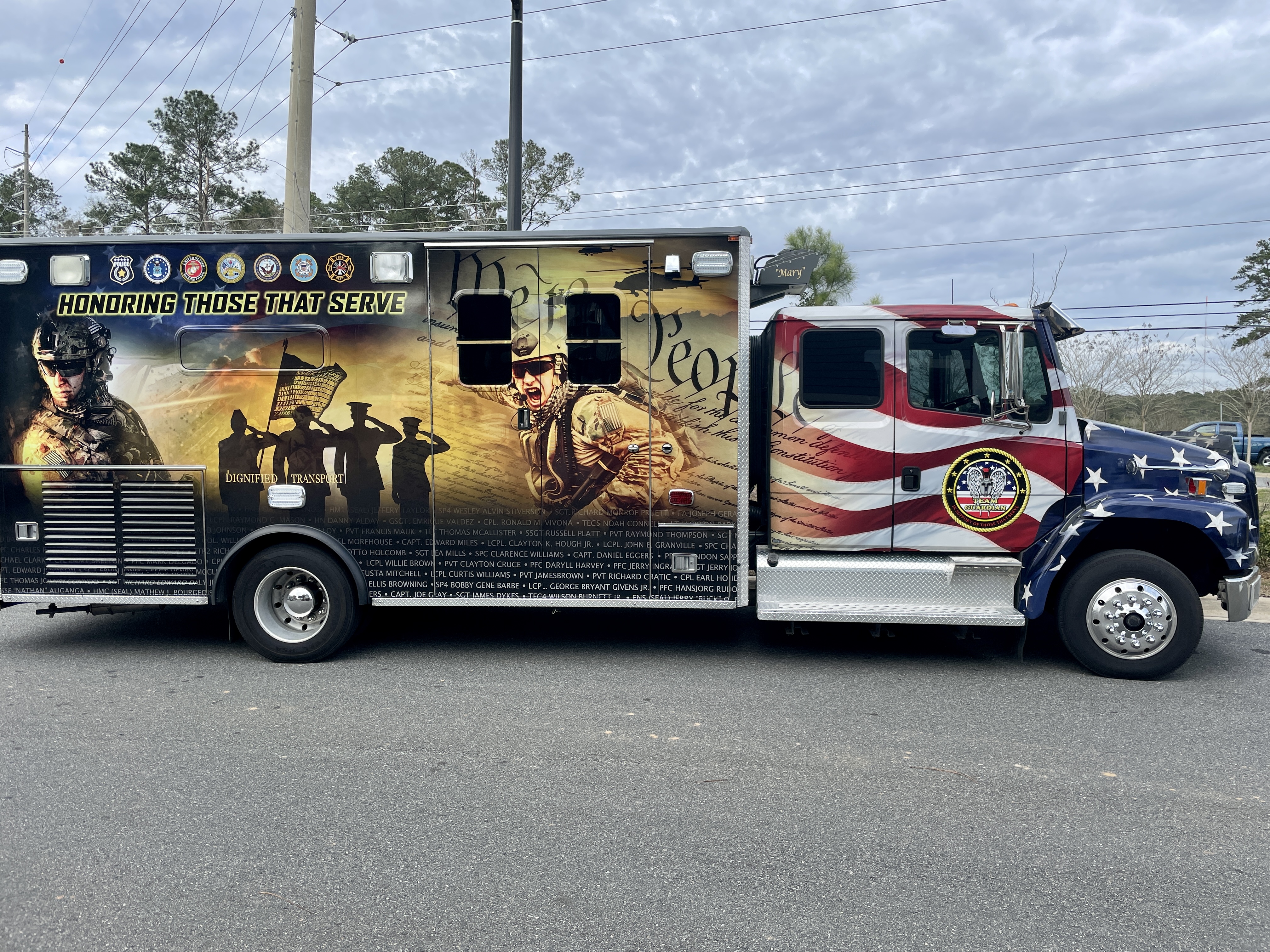
I am deeply grateful for Lieutenant/Chief Terhune’s friendship, openness, service and continued caring for his fellow human beings. https://teamguardian.net. If you want to contact Mike, you can email him at Ter1max@aol.com.
 On Beyond Blue
Incredible story, Thank You Mike for all you have done, glad you are doing better. Thanks for sharing this story.
LikeLike
I’m proud to know Mike T. and have had talks with him about the toll service can take. I’m so glad he answered truthfully when he was asked how he was doing.
LikeLike
Not any easy task to listen, capture, and retell someone’s story, especially a story with such important, sometimes emotional, messaging. Thank you for sharing.
LikeLike
I am very proud to call Mike my friend and so very proud of all he has done and continues to do for others, he has set a perfect example of how we all should strive to be. Glad you are doing better Brother
LikeLike
God Bless you, Brother. You were one of the best I worked with at TFD, and I hope you continue to heal and enjoy your retirement years. I know you have been an Icon with Team Guardian, and thank you for your service.
LikeLike
I knew Mike, thankfully I still do. It’s been many years since our paths crossed.
Hello Mike,
Great to hear your story. Many know the same but will never share it, will never acknowledge it.
Thanks for being brave, again.
LikeLike
Another good one 715! Thanks for sharing Mike T and being vulnerable
LikeLike
This one goes to reiterate the saying about being kind because you never know what demons a person is carrying or what they are dealing with. Thank you for sharing
LikeLike
Great job buddy! And a good topic to share. Thank Mike T for being courageous to open his vulnerable self to talk about his journey.
LikeLike