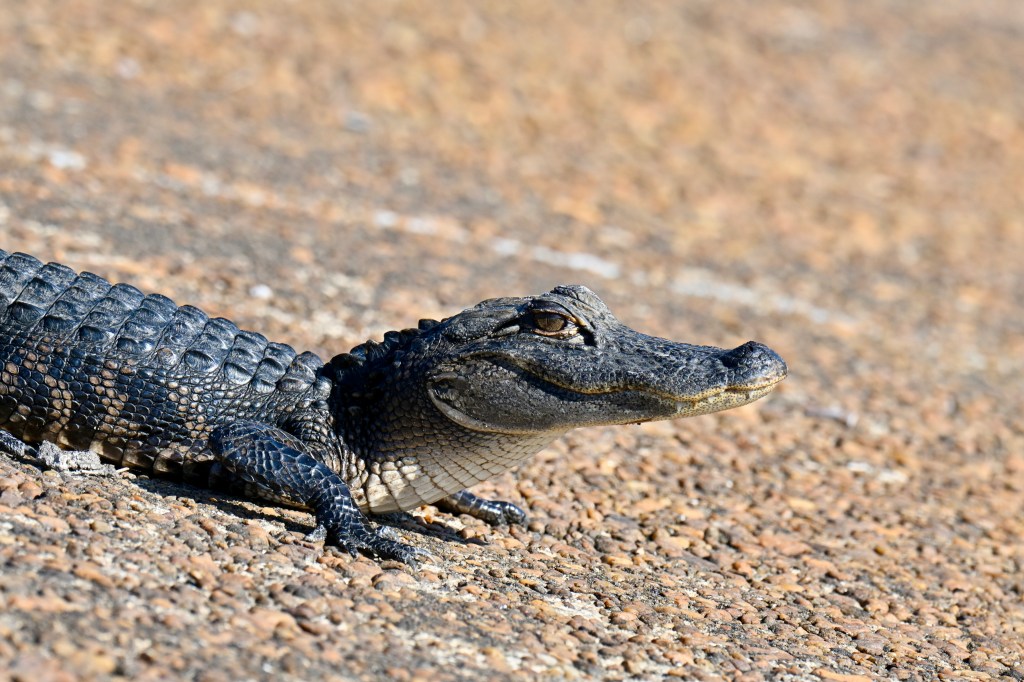
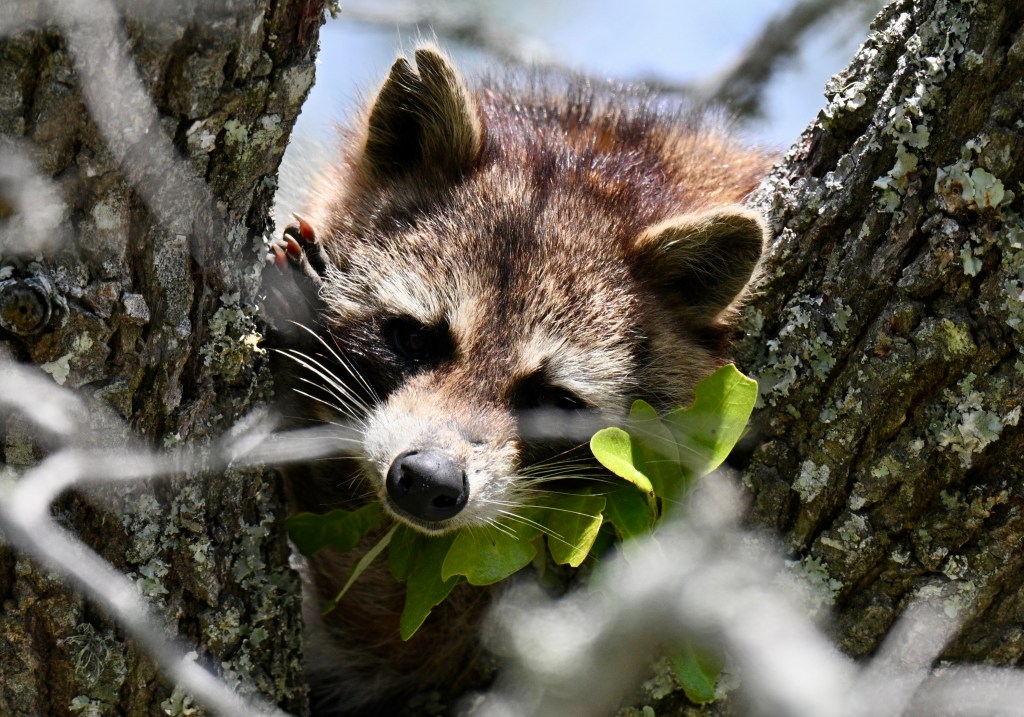
In previous posts I have extolled the virtues of trekking into the back country and losing yourself for a while. There is a great deal to be said for leaving the busy world and our electronic lives behind for a bit and spending time with nature. The best way to avoid injury while doing so is to be careful while you are out there, not take chances, pay attention to signs (like the ones saying to stay on trails or not to go past a certain point) and be aware of the world around you. Wild animals are WILD. It is not a petting zoo. No matter what you see other people doing, no matter how cute the animal looks, do NOT APPROACH or try to contact a wild animal. At this point, one might think that such warnings are not necessary. Oh boy would one be wrong. People do it all the time and get mauled, killed, have their stair vehicles destroyed and so on. For example; over an 11 year period in the U.S. there are about ten beaver attacks. There have been 59 otter attacks since 1875. Elk attacks are sharply on the rise. None of these animals are animals are I would normally associate with seeking out humans and injuring them. Want to bet what the common denominator was in these “attacks”? Stay away from wildlife. Observe, photograph from a safe distance and move on. Enough said.
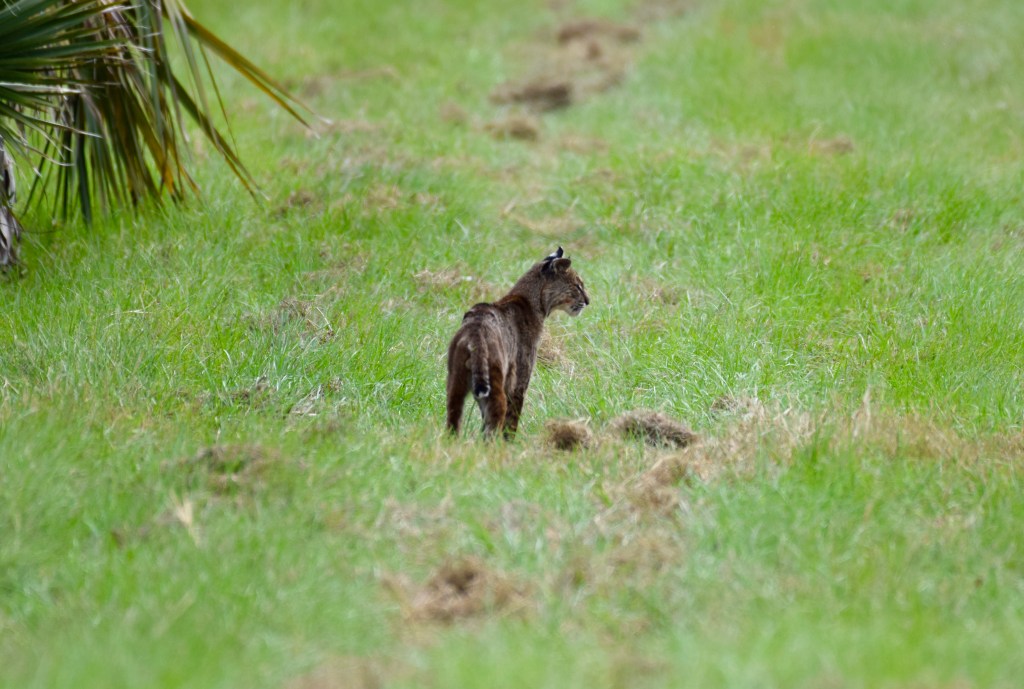
Preparation for hiking in the wilderness (or semi-wilderness) involves you understanding where you are going, the challenges there, hazards, resources and legal restrictions. Do your research. I will be showing you, the reader some products here. I am not endorsing these products or saying this is what you should carry (each situation is different-see above) but, after all this time talking about where I go and how great it is to be out there, I thought I’d share the equipment that I take with when I go. This is simply what I carry. I hope sharing it helps you in your research and decision making.
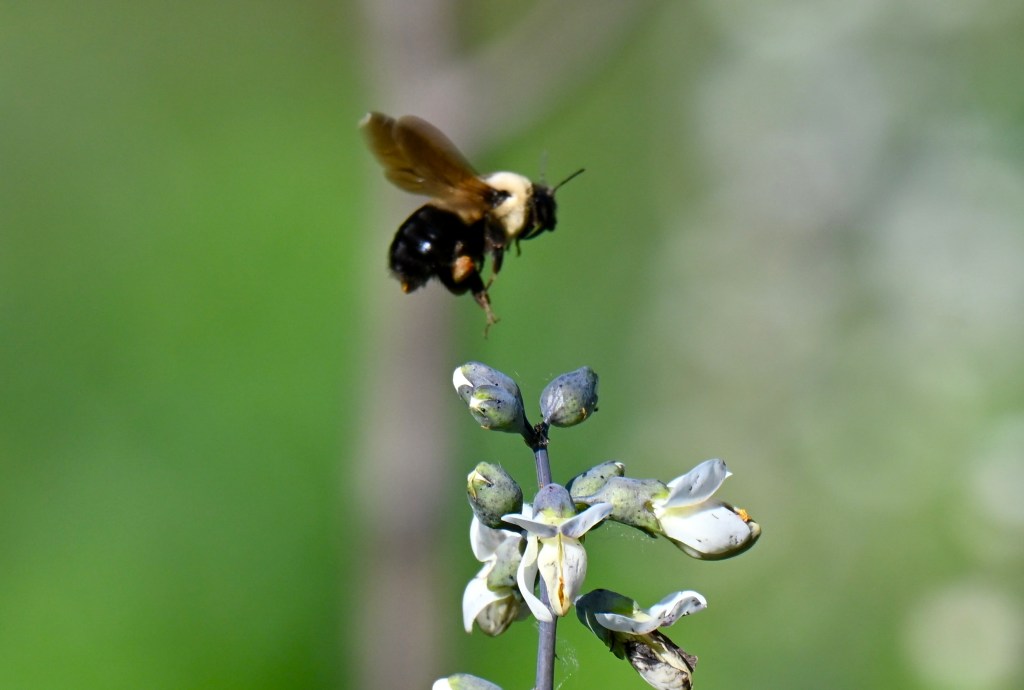
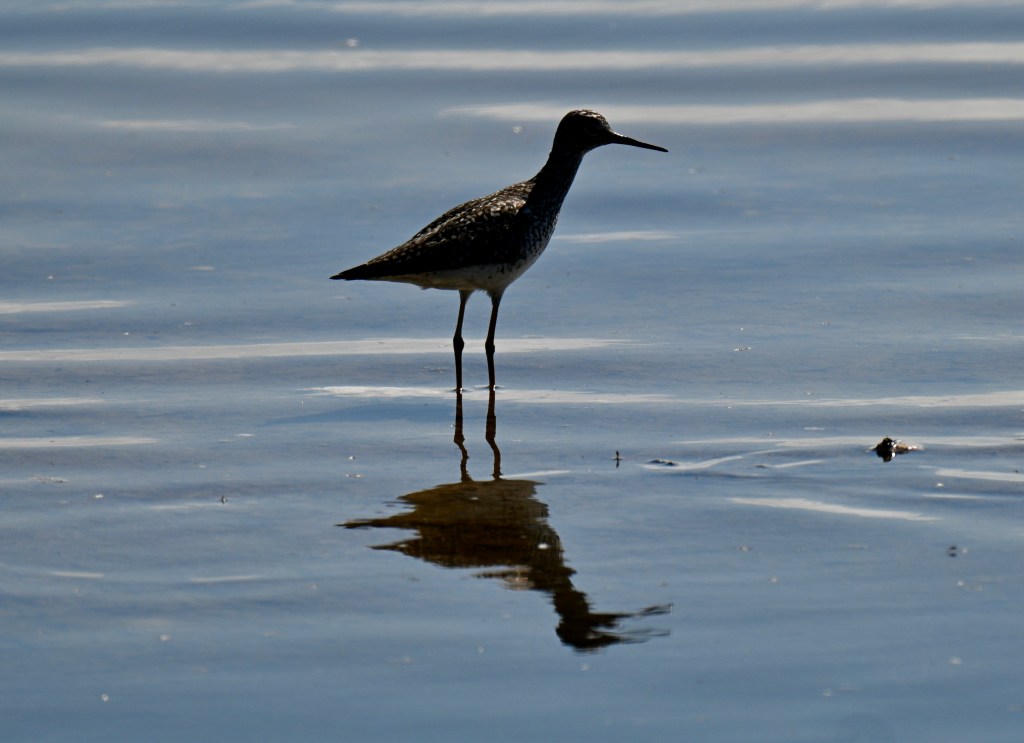
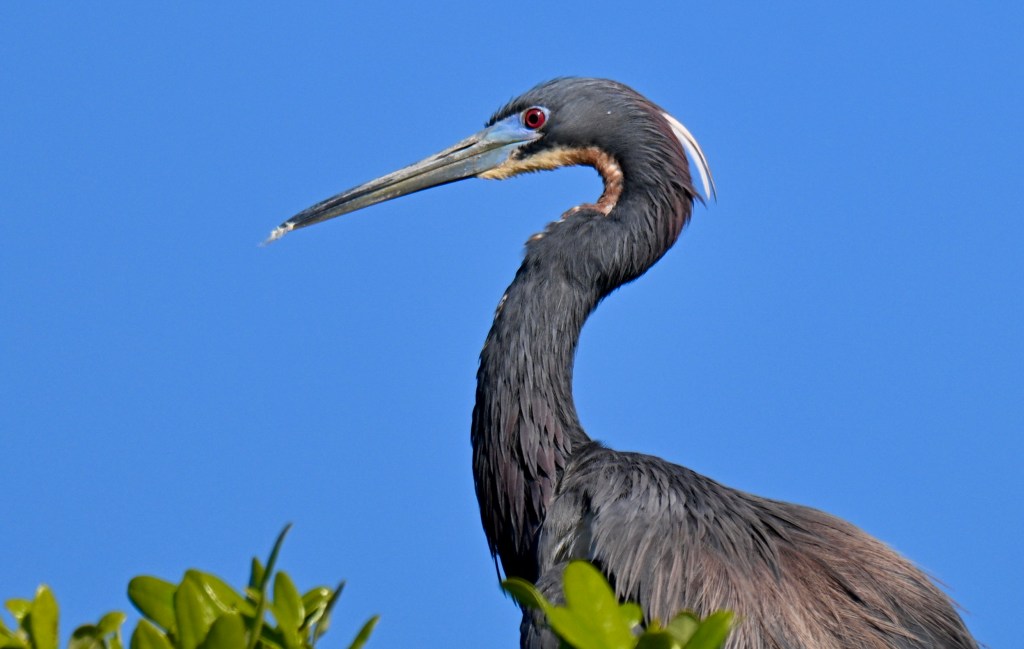
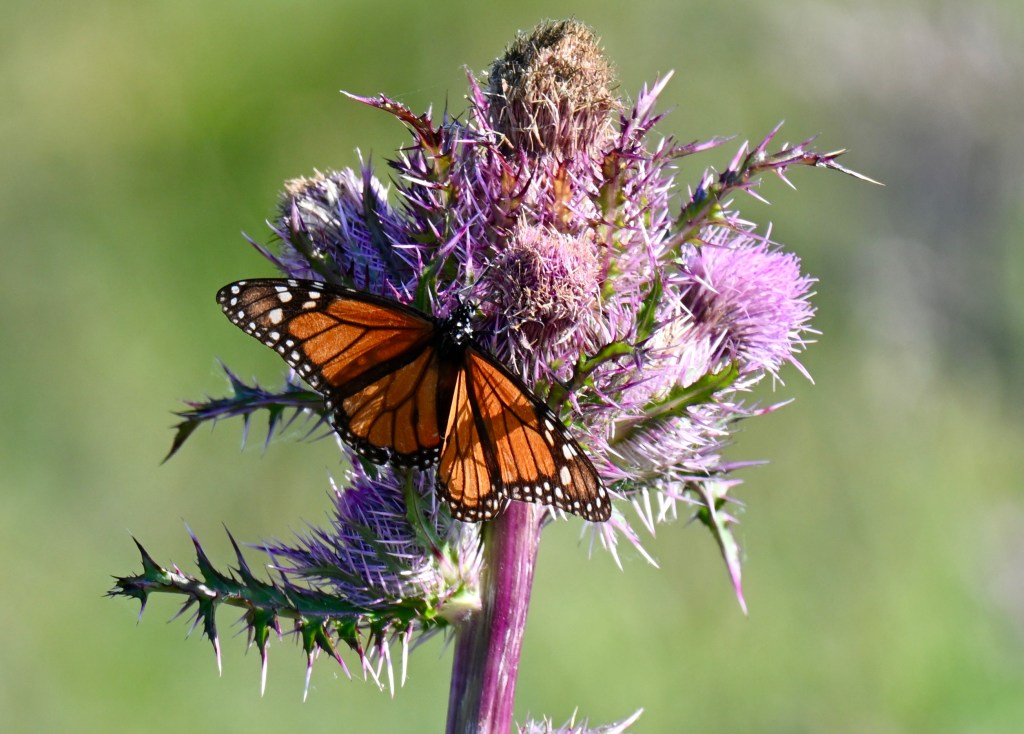
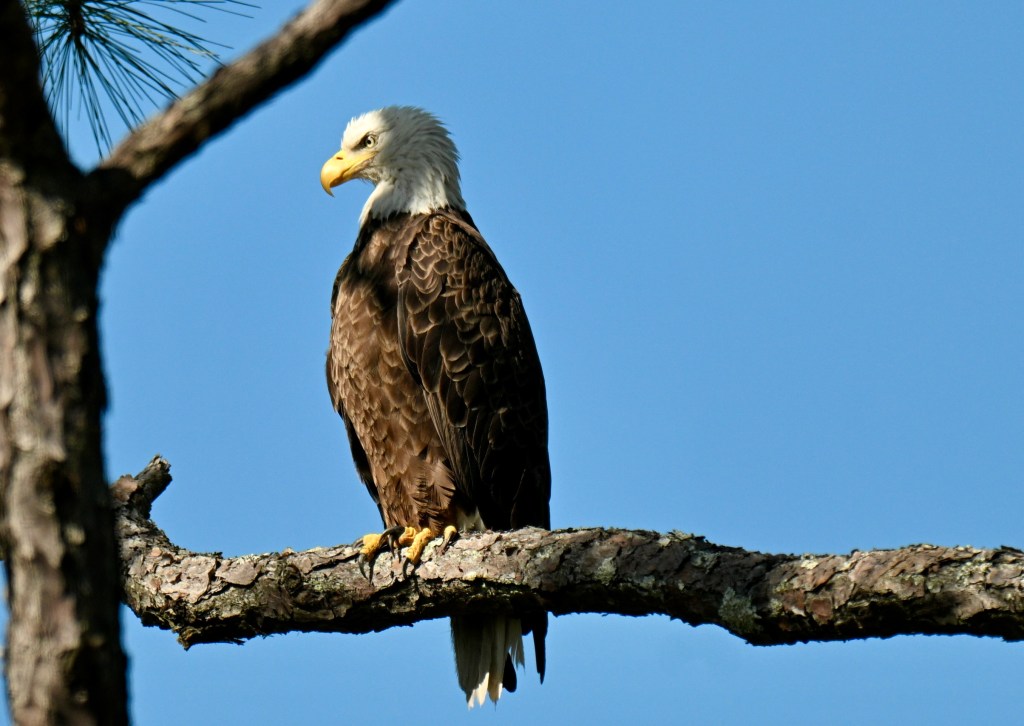
Philosophy first. 1. I prepare for the hike I’m going on. For example; I don’t take my pack on suburban hikes as I don’t need the full compliment of equipment it carries. 2. I seek animal encounters ethically. I LOVE wildlife photography and its challenges. One of the challenges is that the animals have minds of their own. They do not pose, they move (or don’t as the case may be). I don’t encroach, throw things etc. I get the picture or I don’t and leave the animal alone. Aside from being shitty, it can be illegal (Title 16 U.S.C. various sub.). 3. I don’t trespass. If there is a fence, don’t climb it. If there is a sign, go the other way. The picture just isn’t worth it. 4. Finally, if you expect to see wildlife, hold your mouth right. Jibber jabbering at high volume in the wilderness is great for socializing and catching up. Not so great for seeing the critters. They can hear you a loooooooong way off and will take steps to avoid you.
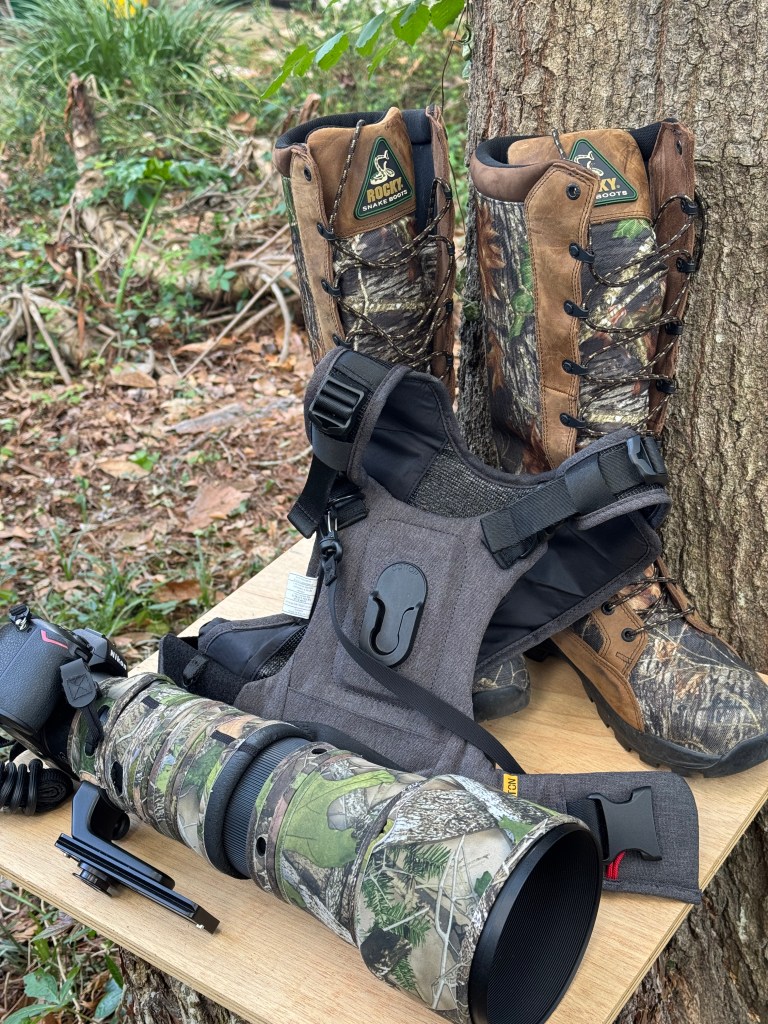
I’ll provide links for most things or I’ll let you know if they are available on Amazon.
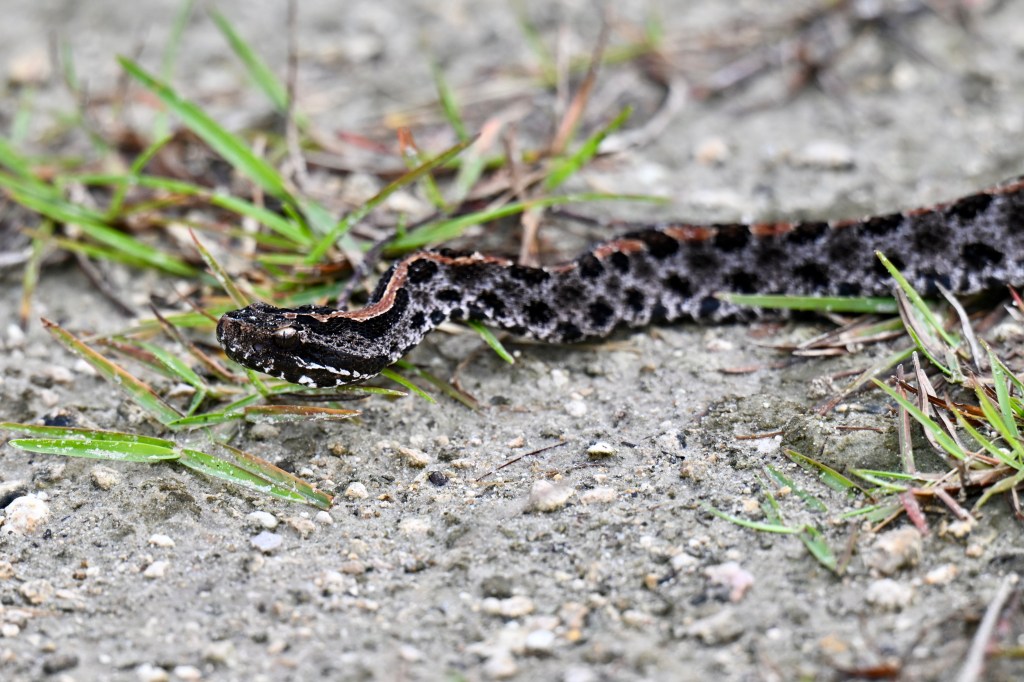
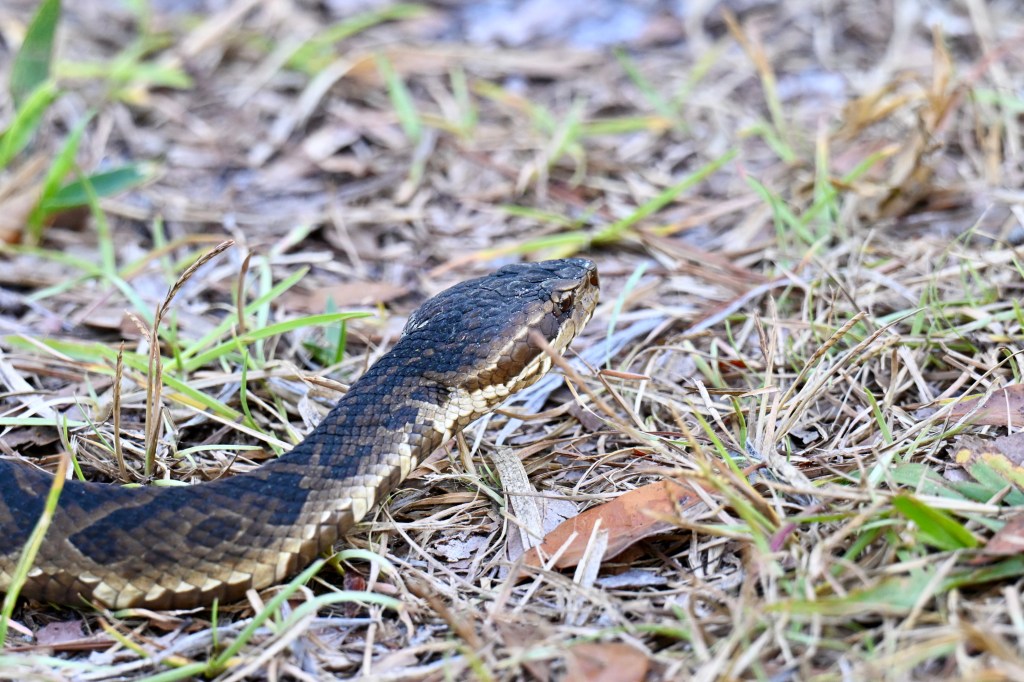
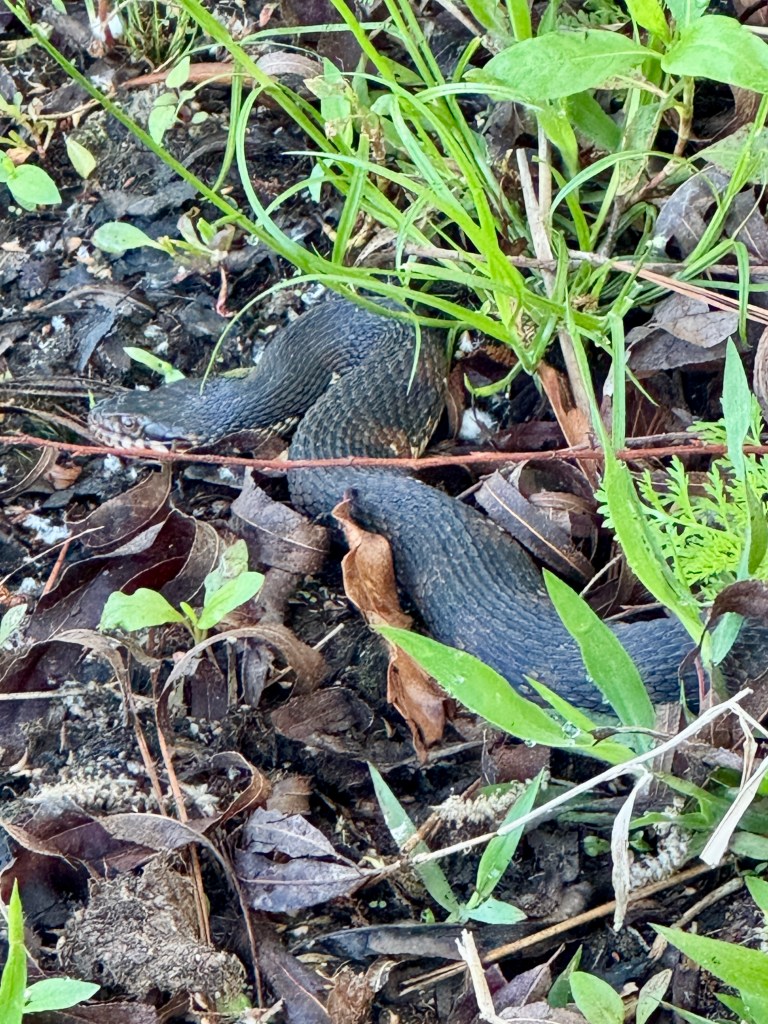
Basic kit: If I’m hiking near the water’s edge or in high grass now after multiple close calls with those little lovelies in the first gallery, I wear snake boots. The boots are lightweight hybrid hiking/snake boots made by Rocky . The ones I settled on are called the Prolight and are available on Amazon. They broke in fast (about a half mile of walking!), are flexible, waterproof and reasonably comfortable. About the only down side to them is they are hot…but what did I expect? They come up to my knees. If I am not in high grass or near water, then I wear good quality hiking boots or hiking shoes (whichever is appropriate). The vest is a game changer if you carry a camera during hiking. It is made by Cotton Carrier and is also available on Amazon. Note the round metal disk on the foot of the camera-it fits into the chest plate of the vest and allows for secure, hands free carrying of the camera that puts the weight on your shoulders. Wow…things I wish I’d invented. Finally, I shoot a Nikon z50II with a 180-600 lens https://www.nikonusa.com/p/z50ii/1784/overview?_gl=1*jpc47c*_up*MQ..*_gs*MQ..&gclid=EAIaIQobChMIj53E9eXwkwMVdFJ_AB0LxQneEAAYASAAEgIfGfD_BwE&gbraid=0AAAAADyulitIAkuncAb4xj1THoPhsmrhT. This is the Nikon web site, but both can be found on sites like B and H photo https://www.bhphotovideo.com or similar vendors.
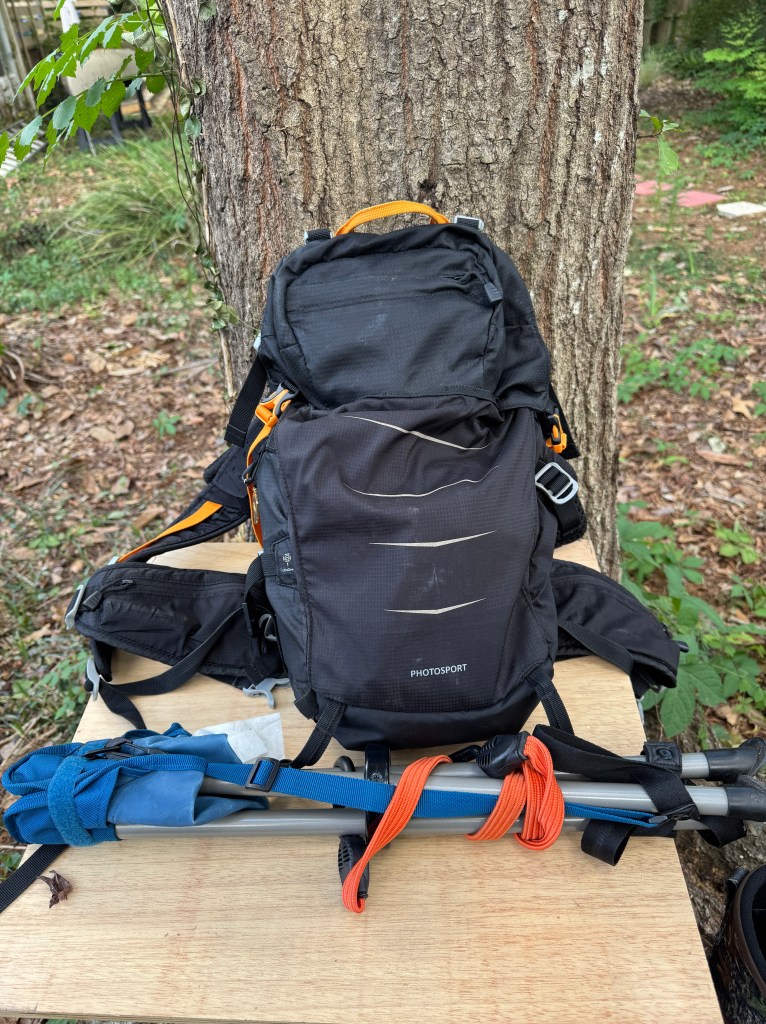
Extra kit: For extended hikes or in rough or unknown locations I take a LowePro camera bag specifically for hiking . It carries my extra lenses and other equipment (details to follow). I occasionally carry a small foldable camp stool with a bungee cord. It is handy, light and easy to park myself on if there is something I’d like to watch for a while or I just want to take a break.
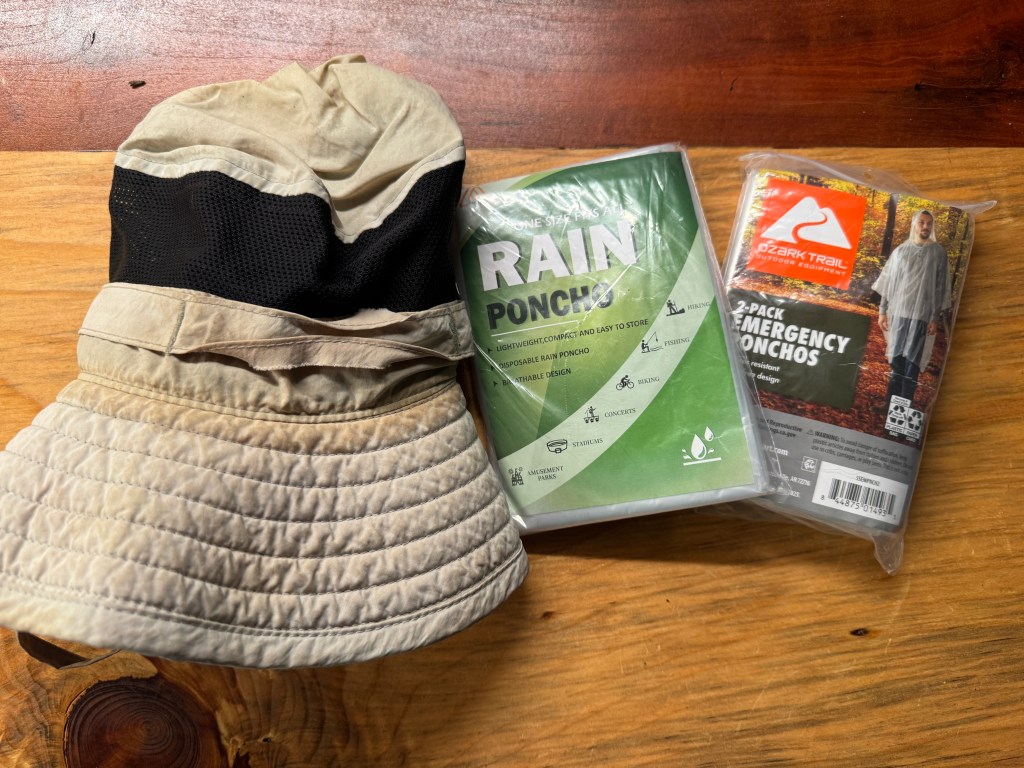
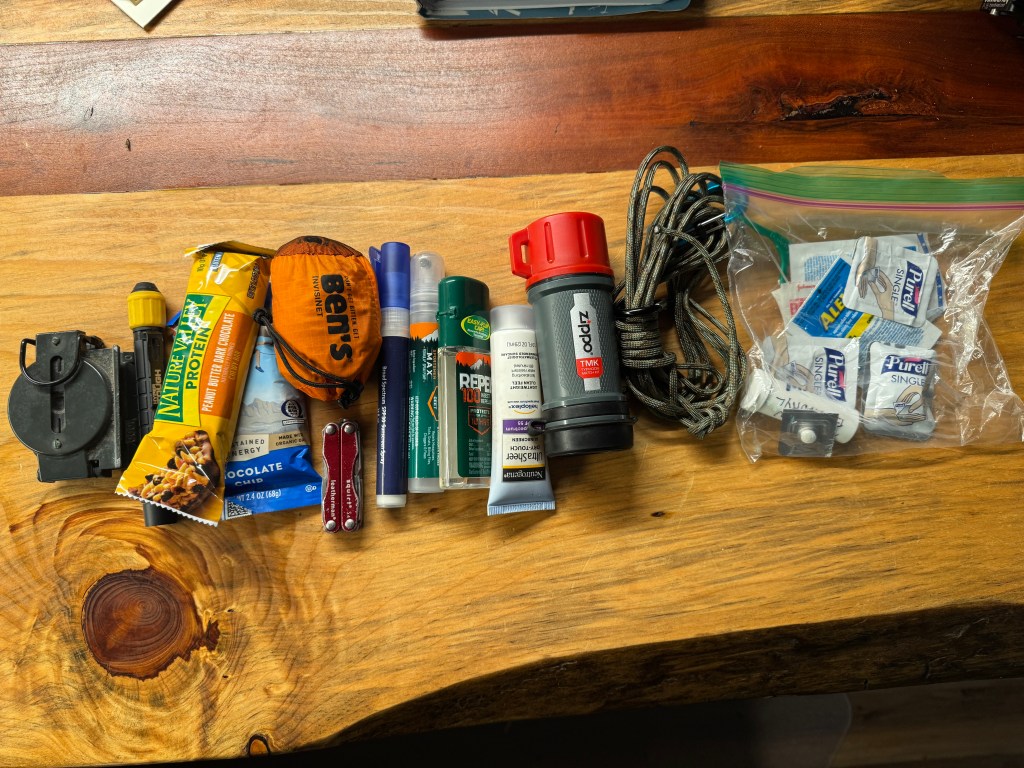
I’m bald. So I always carry an extra hat. I carry two cheap emergency ponchos. I can cover myself, a friend, make a shelter., or both if need be. They weigh nothing and will help keep me and my camera dry for a single use. I carry a compass, small flashlight, food, water (not shown) bug net (in orange bag and a small multi-tool. I carry plenty of insect repellant and sunscreen (where I live you better have both in quantity), a way to reliably start fire, a length of quality paracord and basic medical. The basic medical includes Band Aids, aspirin, antihistamine, alcohol wipes and various other stuff for minor boo-boos. Over and above that, I carry a fully charged cell phone and a sharp high quality pocket knife. All this may seem like a lot, but after years of doing this, years of first responder work and a fair bit of research its what I settled on when I go places where help is not just a call away.
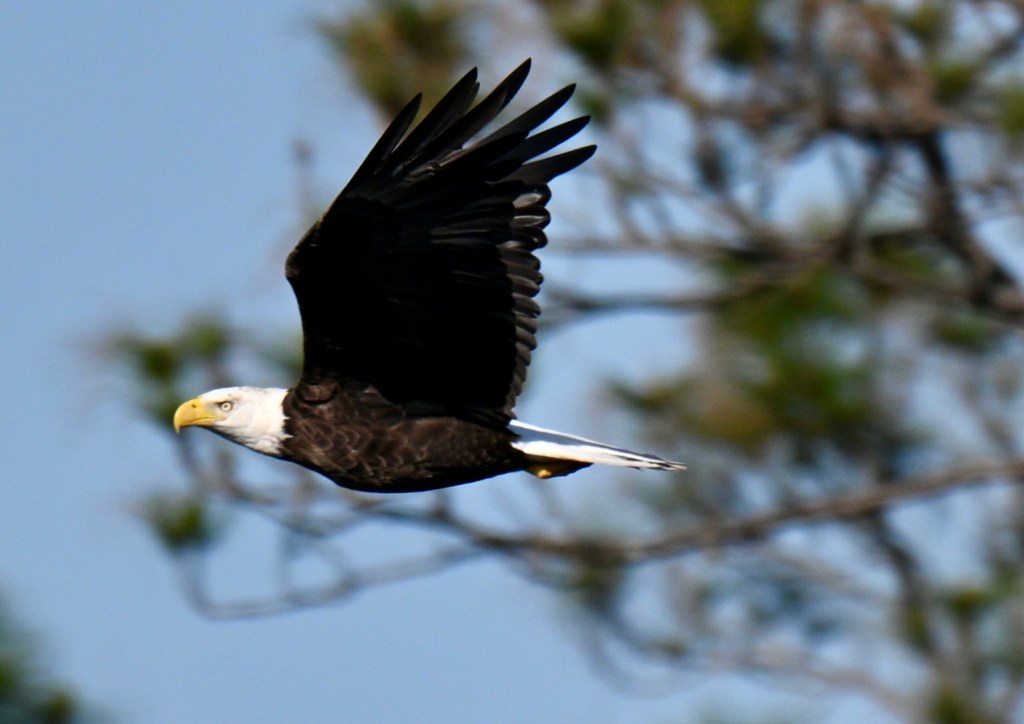
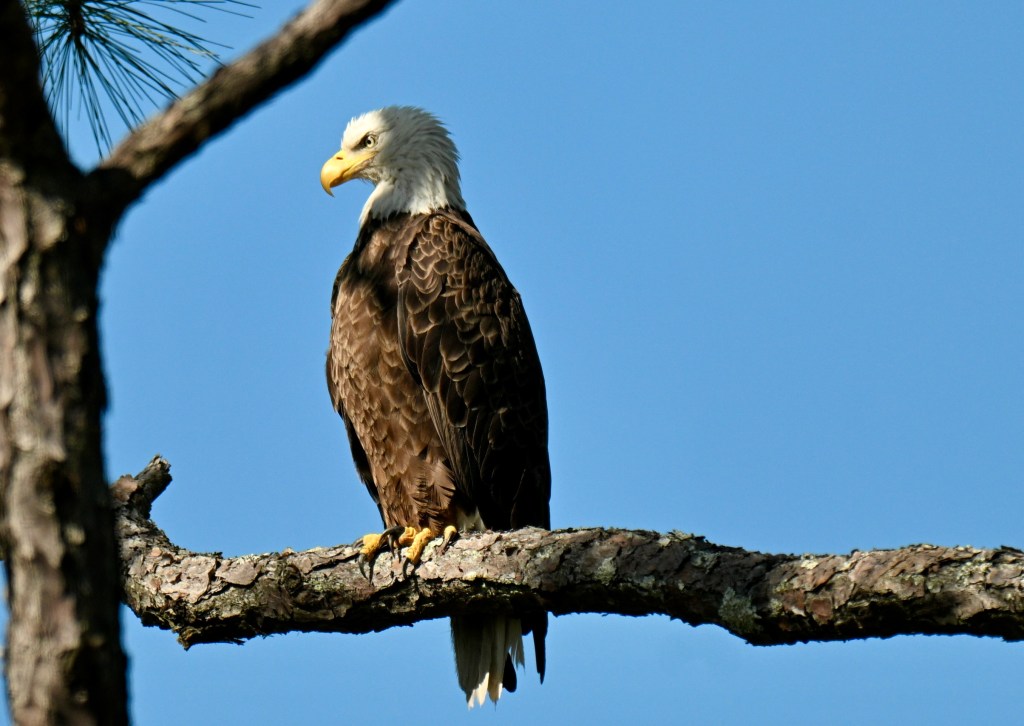
I hope that sharing this has given readers who are interested in venturing into the wilderness some things to think about and build upon. Remember, prepare, avoid issues in the first place if possible and enjoy your time in nature. Do your own research and find what’s right for you and your circumstances.
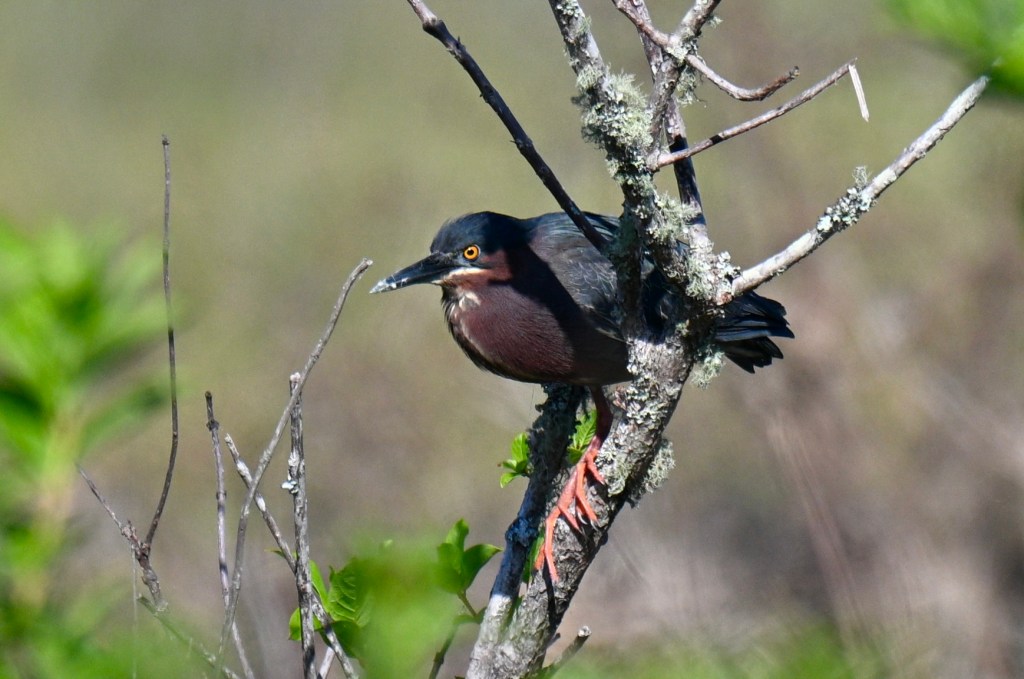
May nature grant you the peace and beauty you seek when you enter it.
If you or someone you know is struggling, there is help. Call 988 or if you are in the Big Bend of Florida call 211. The 2nd Alarm Project has many resources available as well (2ndalarmproject.org). If you are interested in getting notified when a new blog is posted and are not subscribed, please consider subscribing by entering your email in the “subscribe” icon on the home page. Then you’ll get an email each time a new blog is posted. If you appreciate what you have read here, please feel free to share as you are led across your social media or via email. There just might be someone out there who needs to see this content. Thank you all and stay safe.

