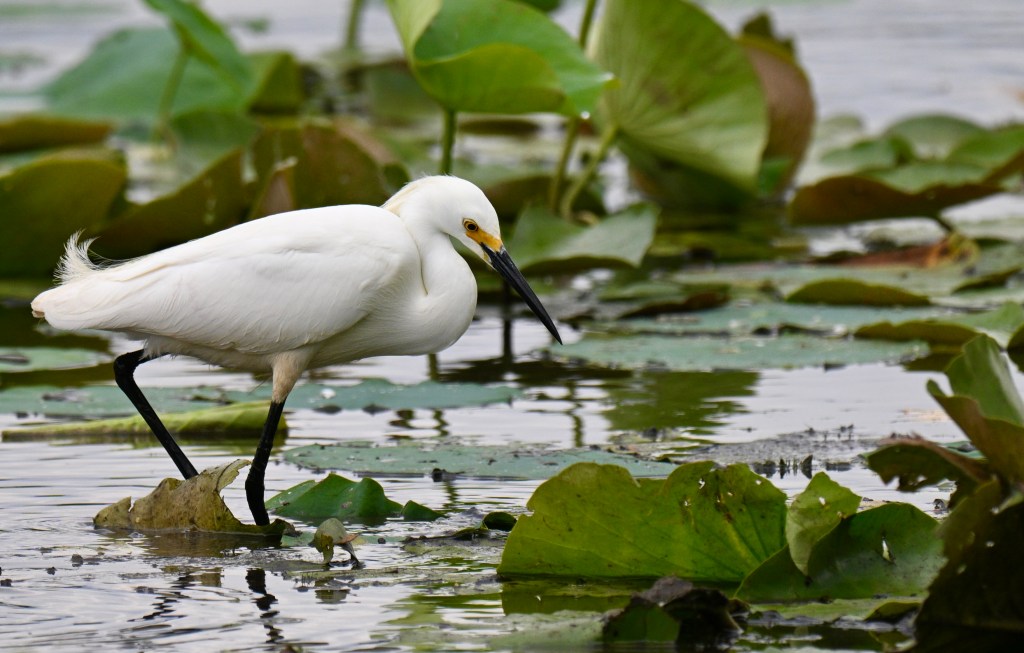
There are many things about wildlife photography that I find fascinating and uplifting and I have written about a fair number of them. One that deserves a brief comment is that as I photograph species, I learn about them. I take the time to learn the identifying characteristics, what makes a male and female different, if are they threatened, and any interesting facts about behavior. So moving forward, as I collect what I consider to be decent photographs of the species, I’ll take a moment to share them and what I’ve learned about them with you…birds and other animals. Birds just happen to be the most numerous (and thus easiest to photograph) animals I come across.
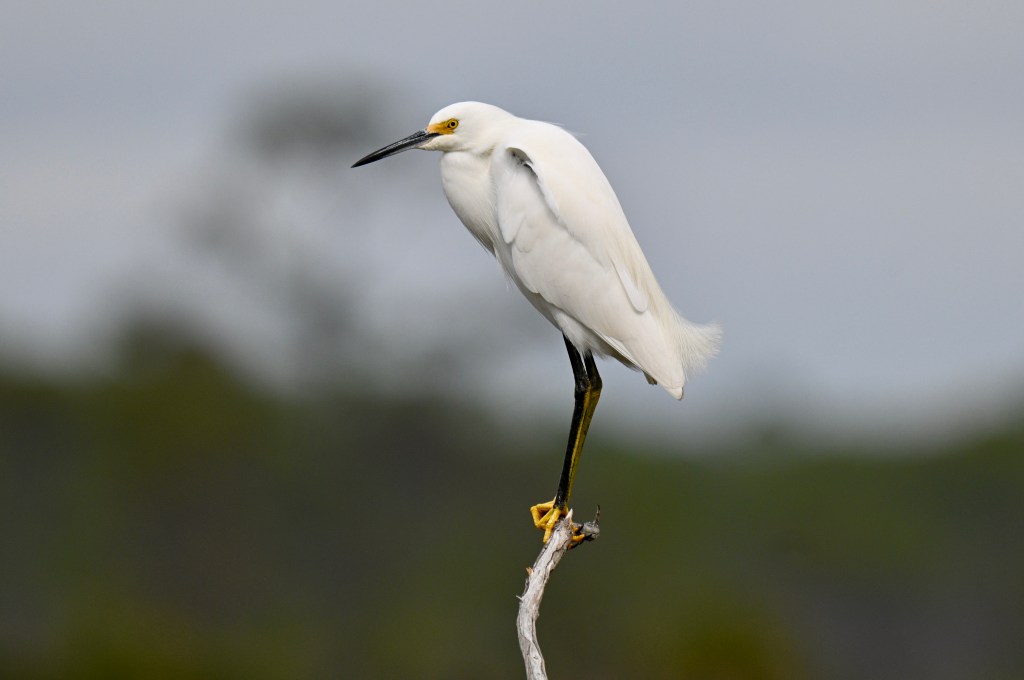
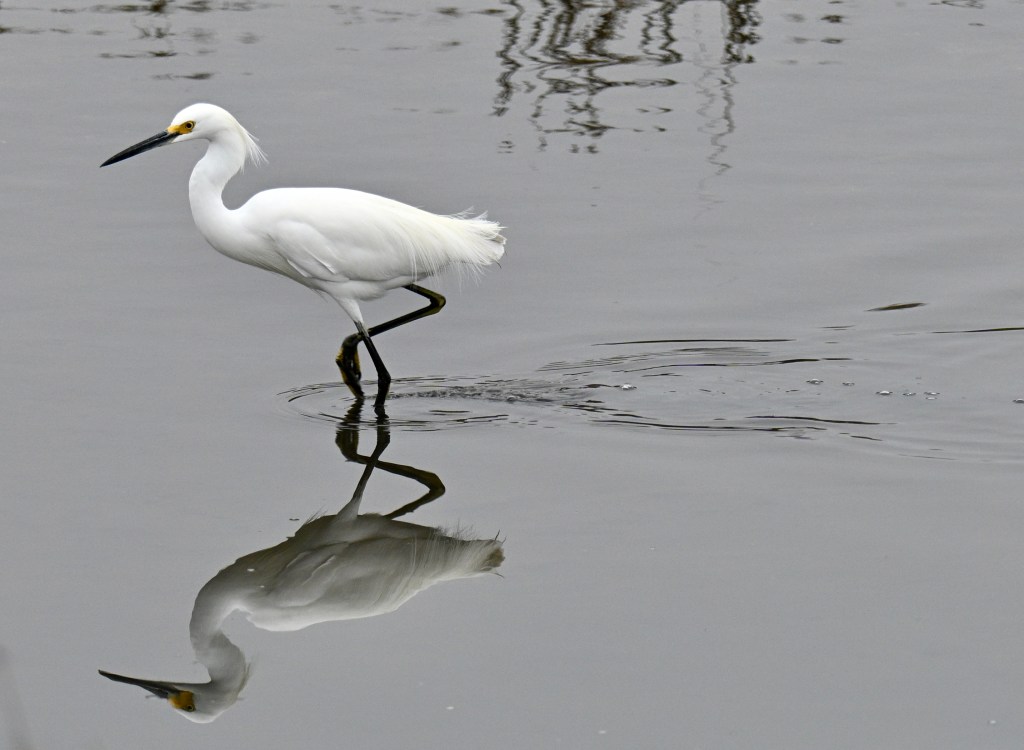
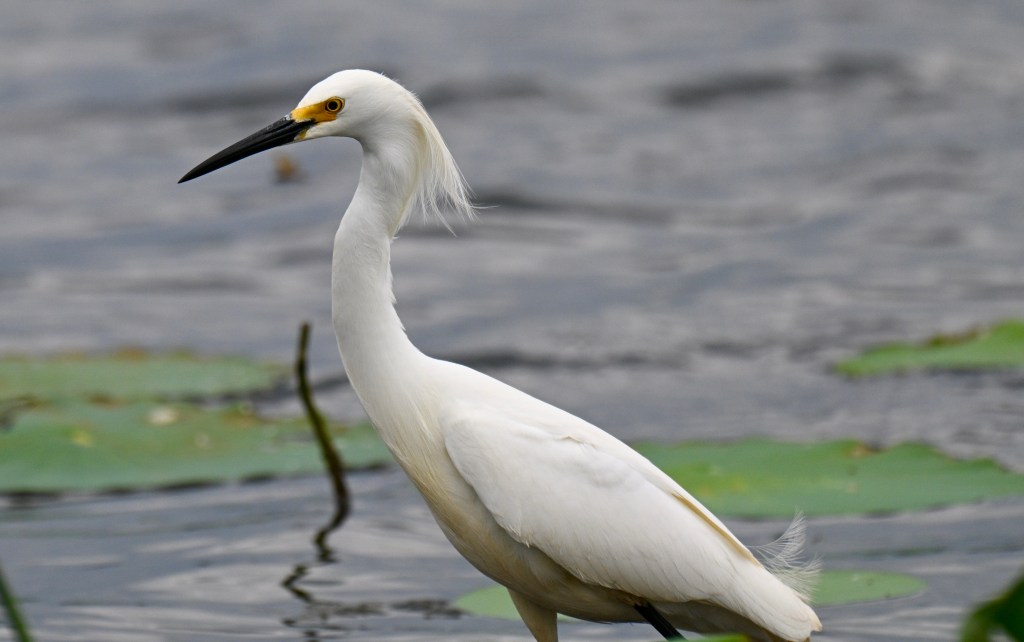
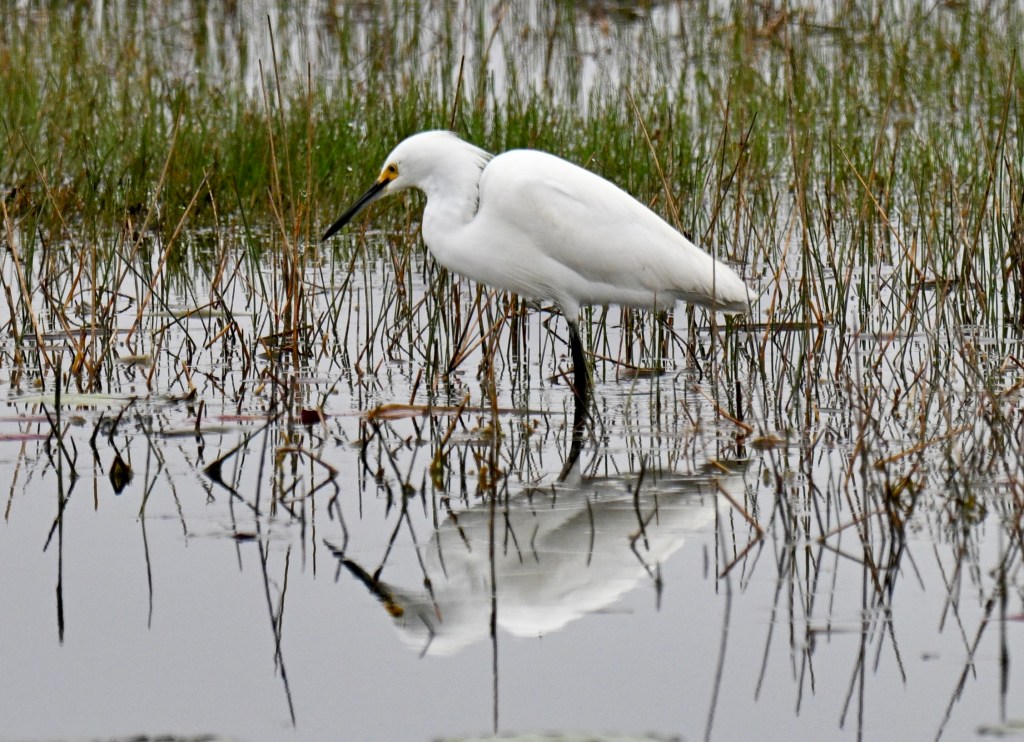
Snowy Egrets are now quite common throughout the southern United States, Mexico and South America. Once hunted to the brink of extinction for their stunning plumes, conservation efforts at the beginning of the twentieth century brought them back from the brink and their populations are now healthy. The adult males and females are about the same size ranging from 22 to 26 inches in length with a health wingspan of 39 to 45 inches and a weight of 13 to 15 ounces. They are roughly the same size as the Western Cattle-Egret and the Little Blue Heron and are easily mistaken for immature Little Blue Herons who are white or mottled.
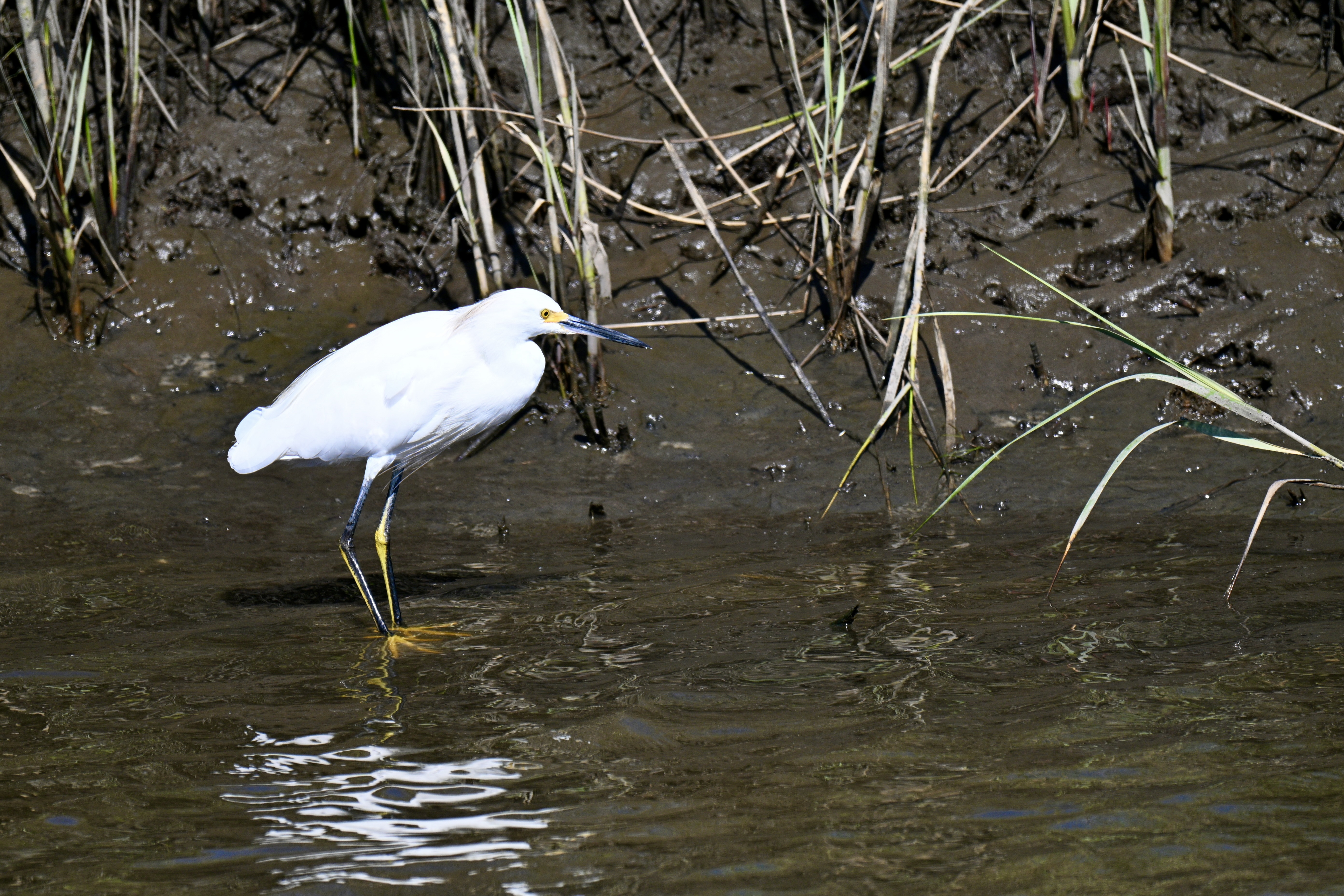
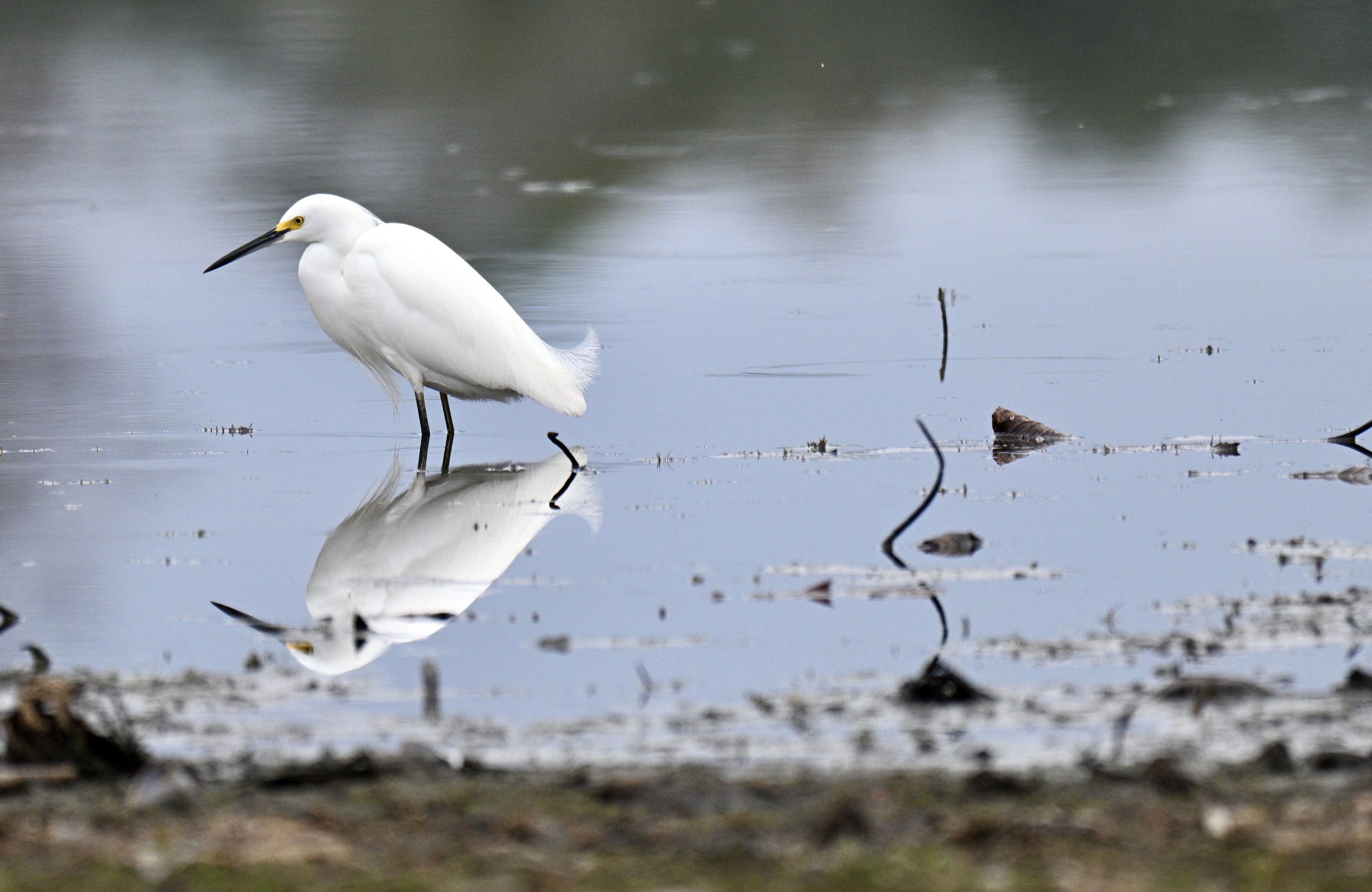
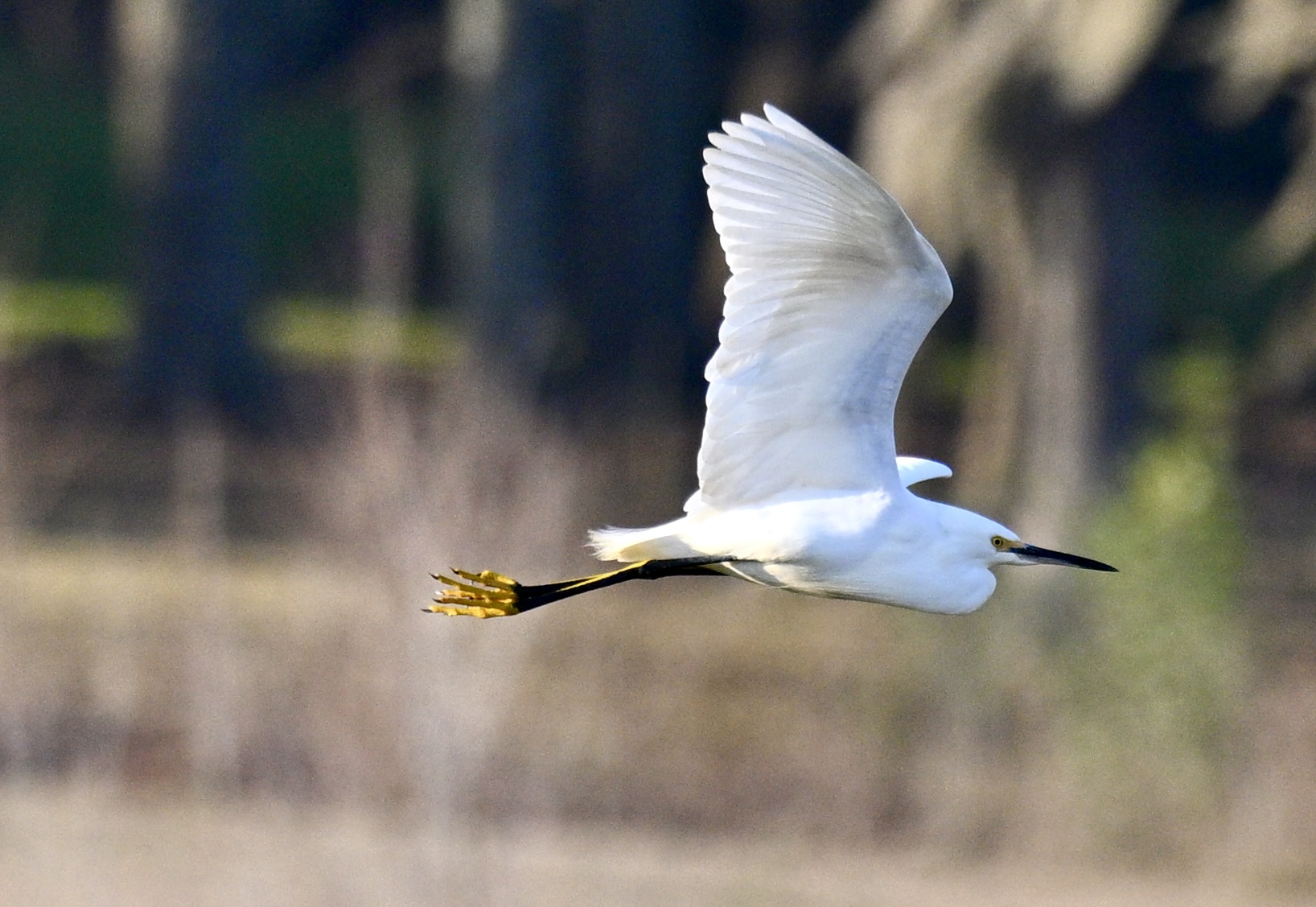
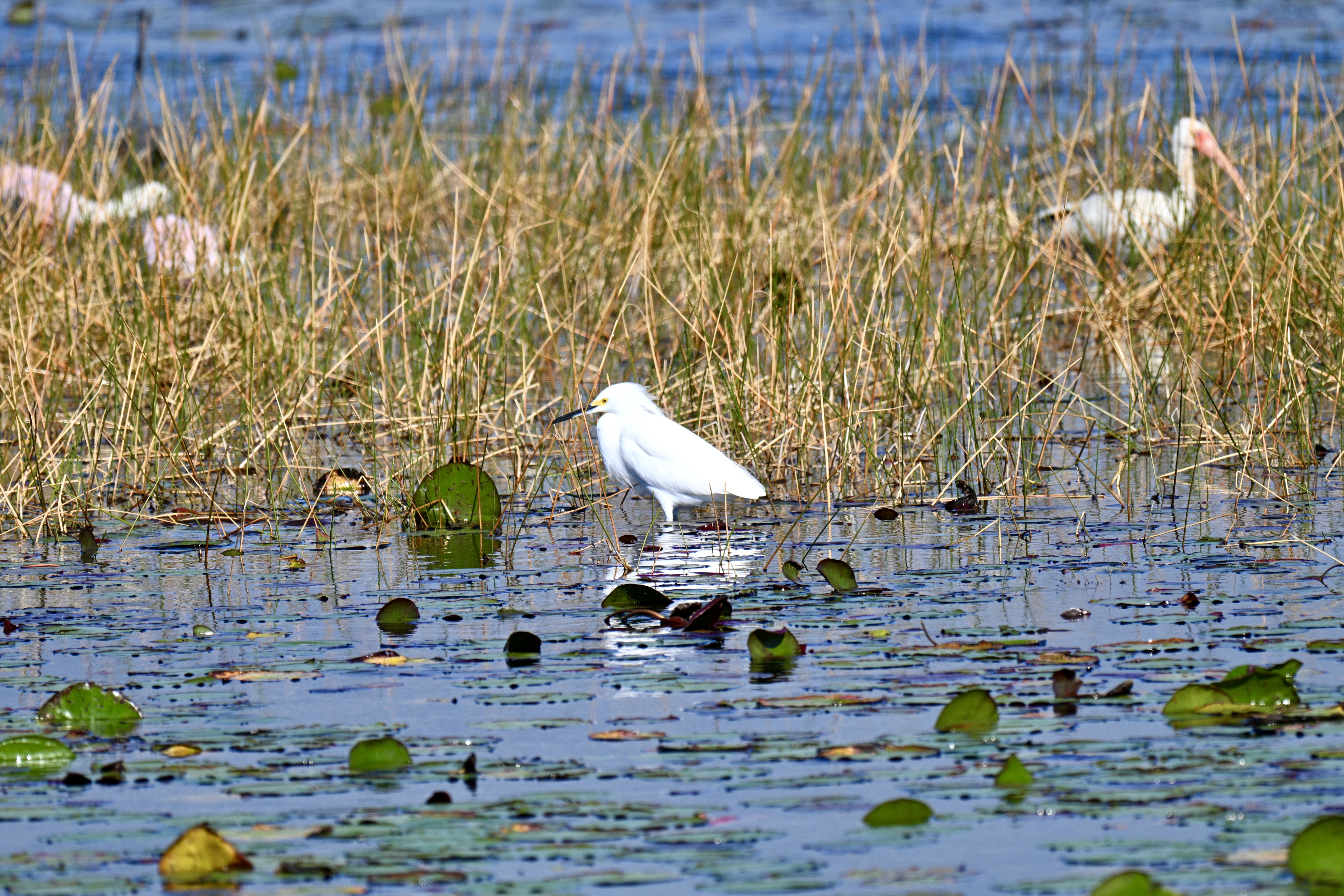
These beautiful but modest sized birds are very social while going about their daily business. The photo above illustrates that nicely as you see one standing in the shallows braced against the wind in the Saint Marks National Wildlife Refuge and Roseate Spoonbills in the left background and a White Ibis in the right background. When hunting the broad diet of small fish, fogs, crustaceans and invertebrates they will often walk slowly and stir the silty bottom with their sensitive feet. They also hunt from perches and reportedly from an occasional hover. They do not seem especially afraid of humans which allows some good looks at these gorgeous birds. Keep an eye out for them in rivers, ponds, lakes and brackish tide pools anywhere in the southern (especially south eastern) United States. If you would like to learn more, click on this link and it will take you to the Cornell Lab All About Birds web site https://www.allaboutbirds.org/guide/Snowy_Egret. It is one of the best resources for information on birds available.
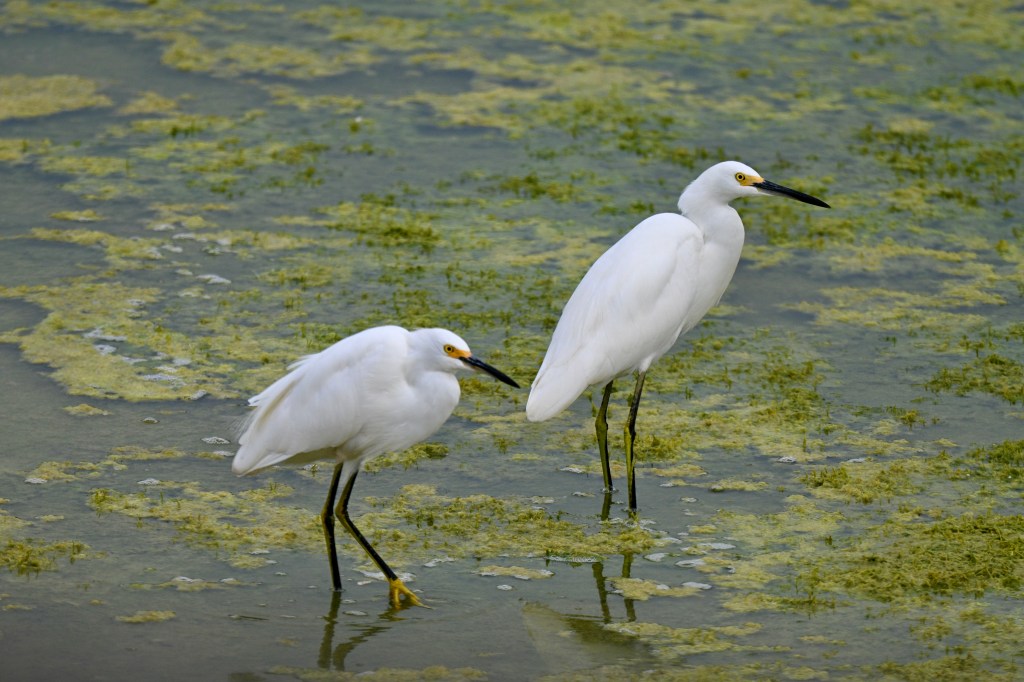
I hope you enjoyed this brief species overview. More to follow soon. Stay safe all and be healthy.
If you or someone you know is struggling, there is help. Call 988 or if you are in the Big Bend of Florida call 211. The 2nd Alarm Project has many resources available as well (2ndalarmproject.org). If you are interested in getting notified when a new blog is posted and are not subscribed, please consider subscribing by entering your email in the “subscribe” icon on the home page. Then you’ll get an email each time a new blog is posted. If you appreciate what you have read here, please feel free to share as you are led across your social media or via email. There just might be someone out there who needs to see this content. Thank you all and stay safe.

