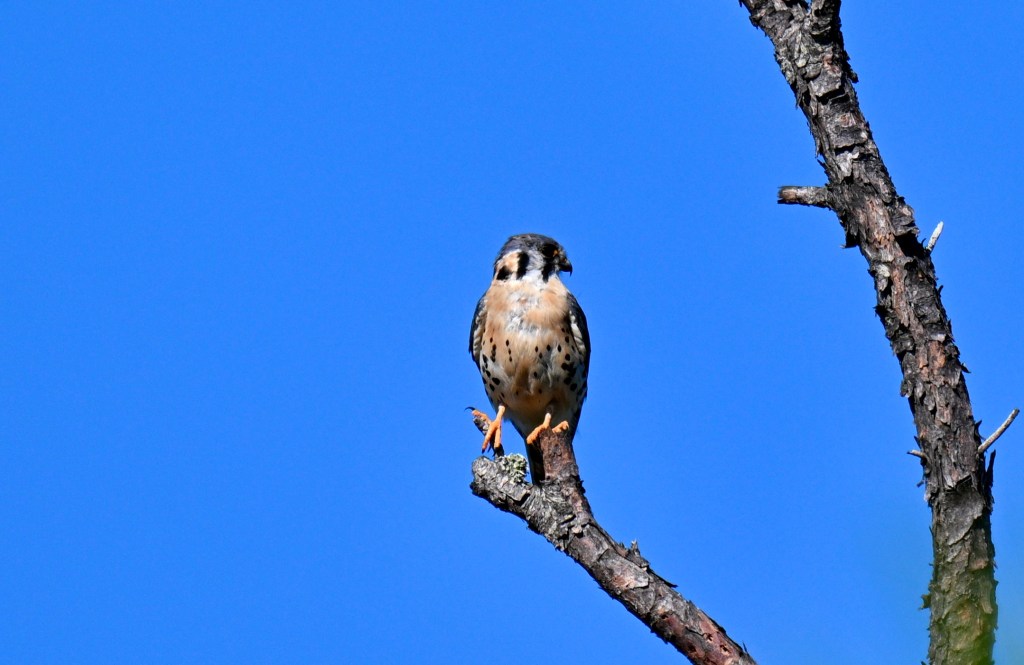
It has been some time since I have done a “Specie Spotlight”, so I’ll feature one now. The last couple of posts have been topic heavy. This will be lighter, shorter and hopefully informative.
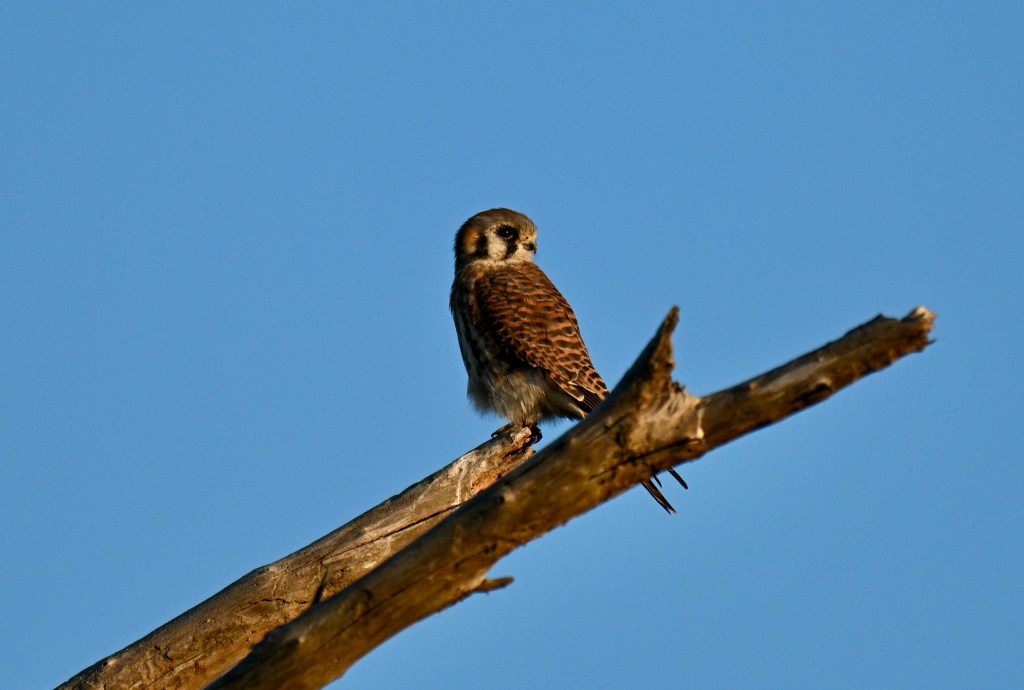
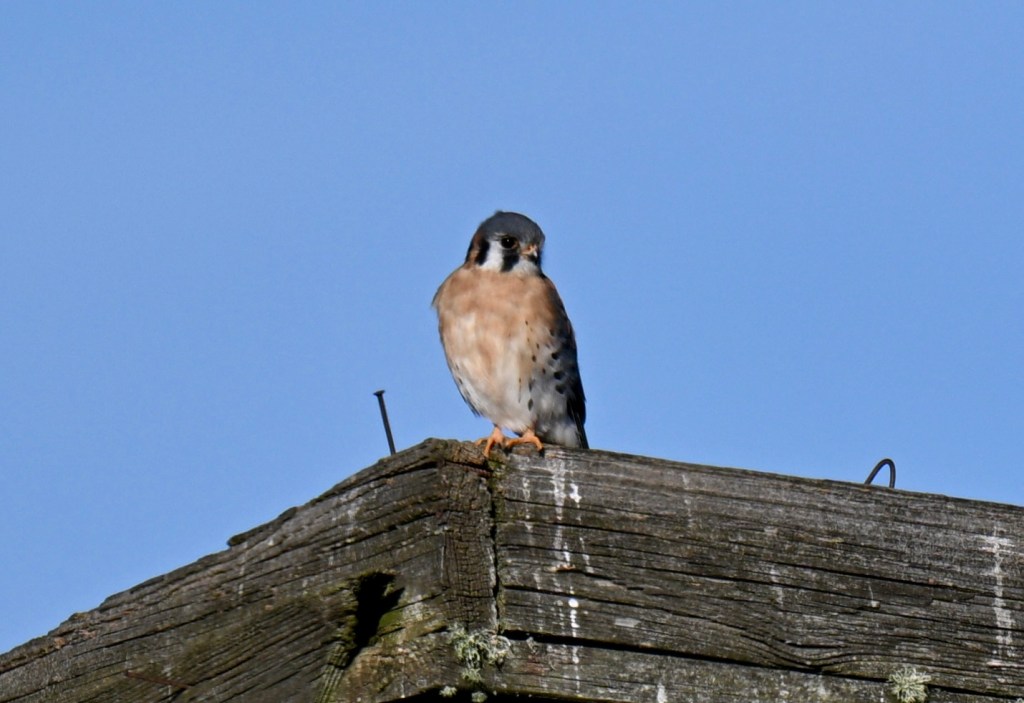
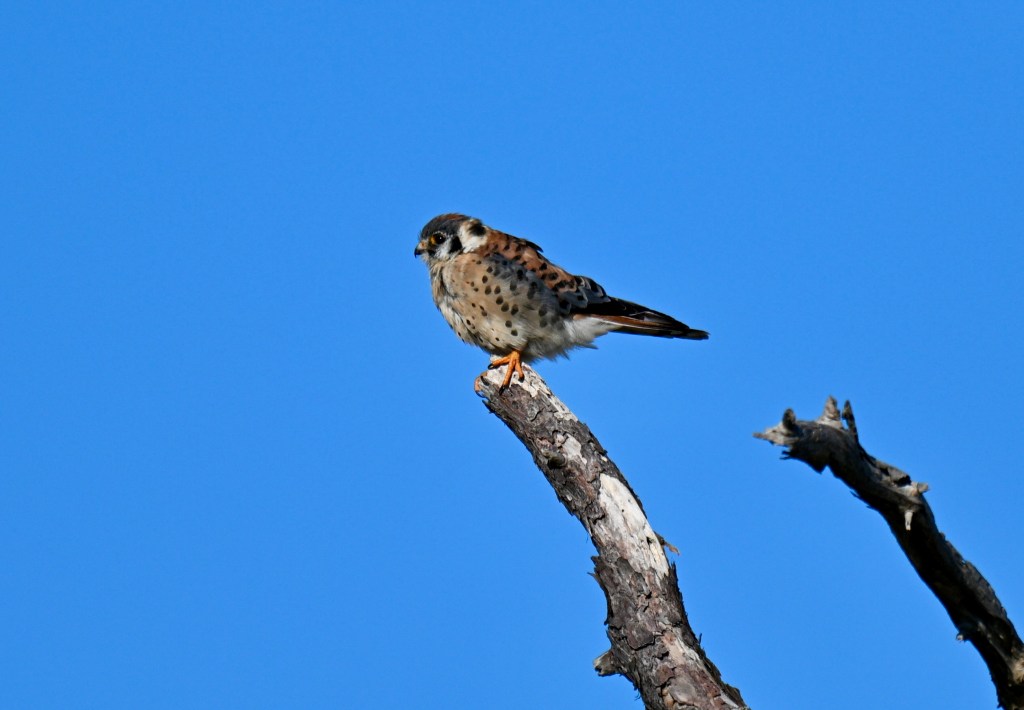
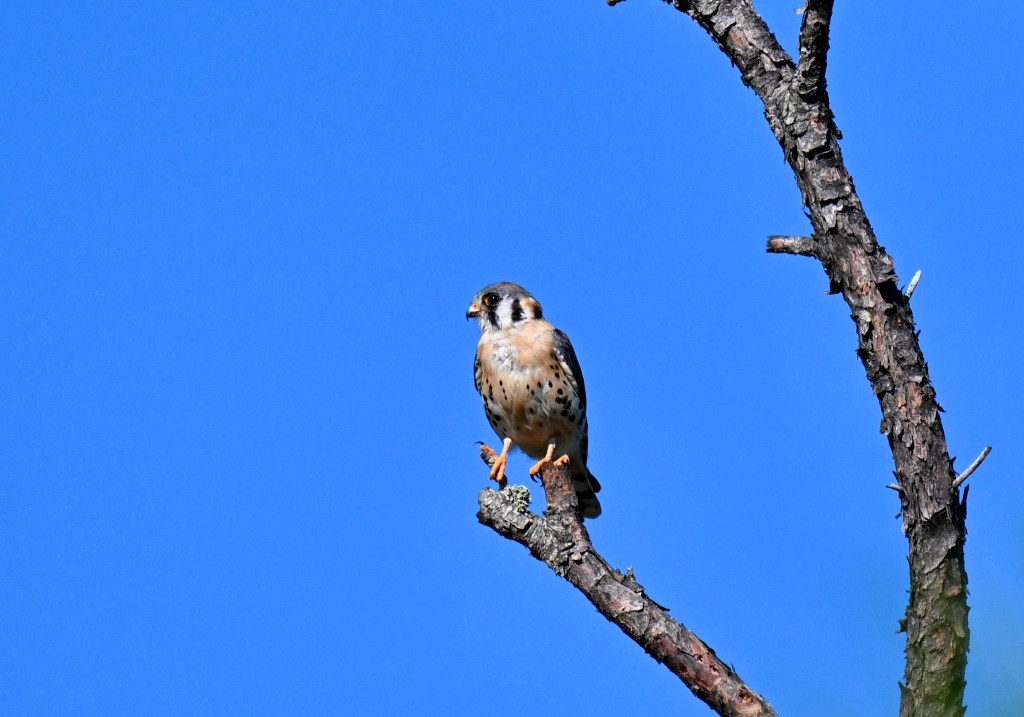
The American Kestrel is North America’s smallest falcon. Roughly the size of a dove, this tiny, colorful predator is a frequent visitor to ball fields, and open areas where it can hunt insects and small animals in the open. Because of its diminutive size, incredible agility and blazing speed (39 miles per hour level flight or 60 miles per hour in dives) they are easy to miss or mistake as another bird while flying. But once perched on lights, dead trees, fences and other vantage points that give this tiny raptor a good view of the surrounding area, there is no mistaking this colorful little powerhouse.
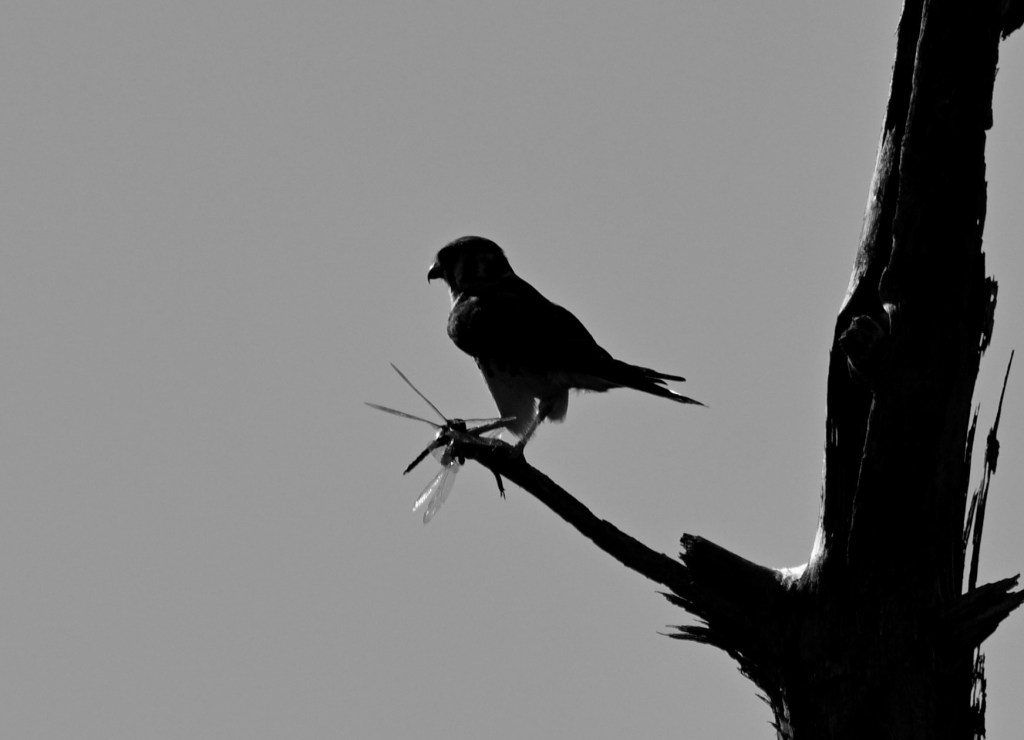
The males are more brightly colored than the females with dark blazes on their faces and brilliant body coloring.
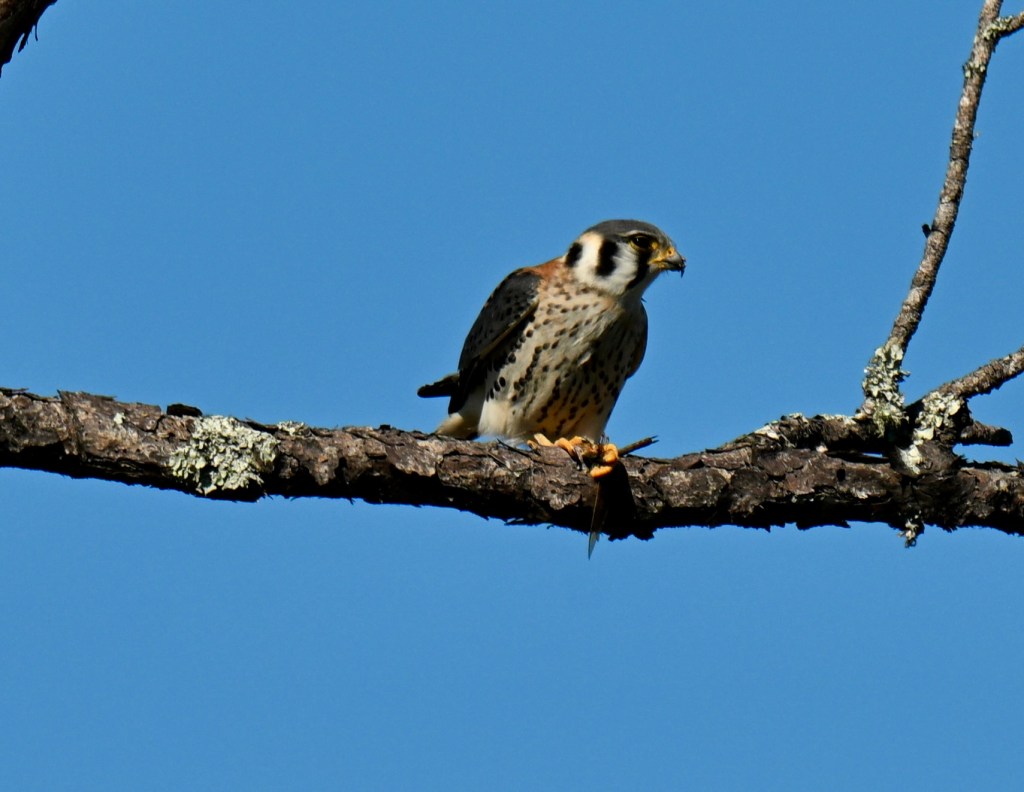
American Kestrels nest in nest boxes (when they can find them) or hollows in trees. Life is difficult for young Kestrels. Apparently, literally everyone preys upon them, including other raptors, crows and even fire ants (https://www.allaboutbirds.org/guide/American_Kestrel/overview). This overview from All About Birds may be useful to you if you would like more information. American Kestrels are in decline in parts of their range due to habitat loss and fragmentation, but overall their population is stable. The hardy little birds have been observed living up to 14 years in the wild.
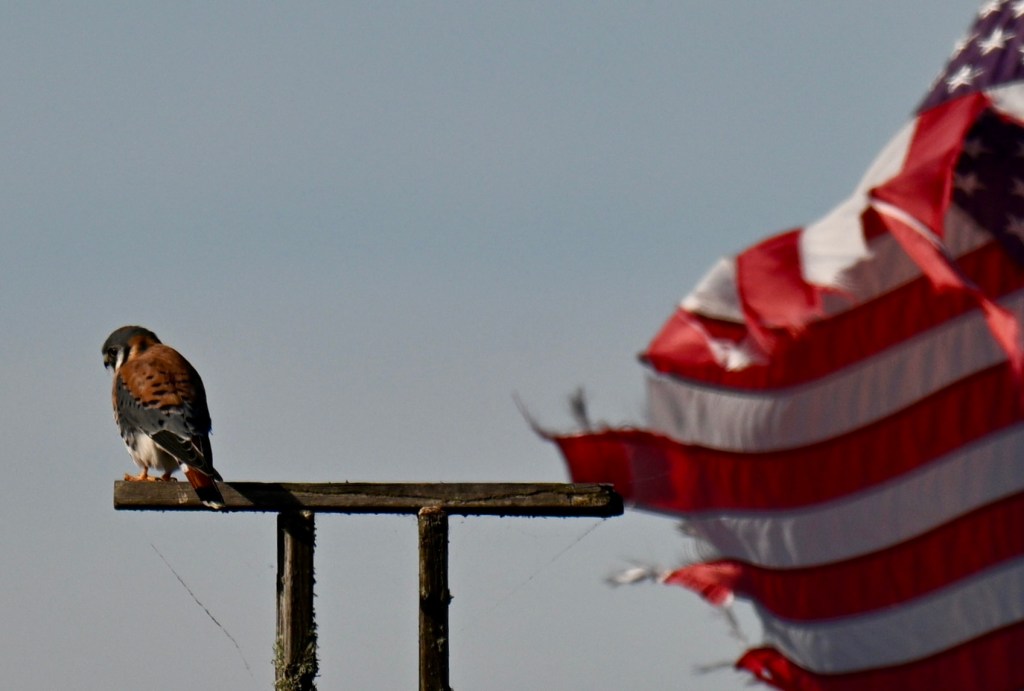
Falconers frequently utilize Kestrels here and in Europe (they have cousins there that appear similar) and find them easy to train and work with. Many of the best photos of American Kestrels available on the internet have their origins in falconry.
The next time you are walking near ball fields, open fields, marsh lands or any open area keep an eye out for there colorful predators. One of the signature moves to watch for is the “Kestrel hover”. If you see a brightly colored dove sized bird in an apparent hover over a field, it is likely an American Kestrel hunting. I hope you enjoyed this glimpse into the lives of North America’s smallest falcon.
Get outside and find one. Stay safe and healthy.

